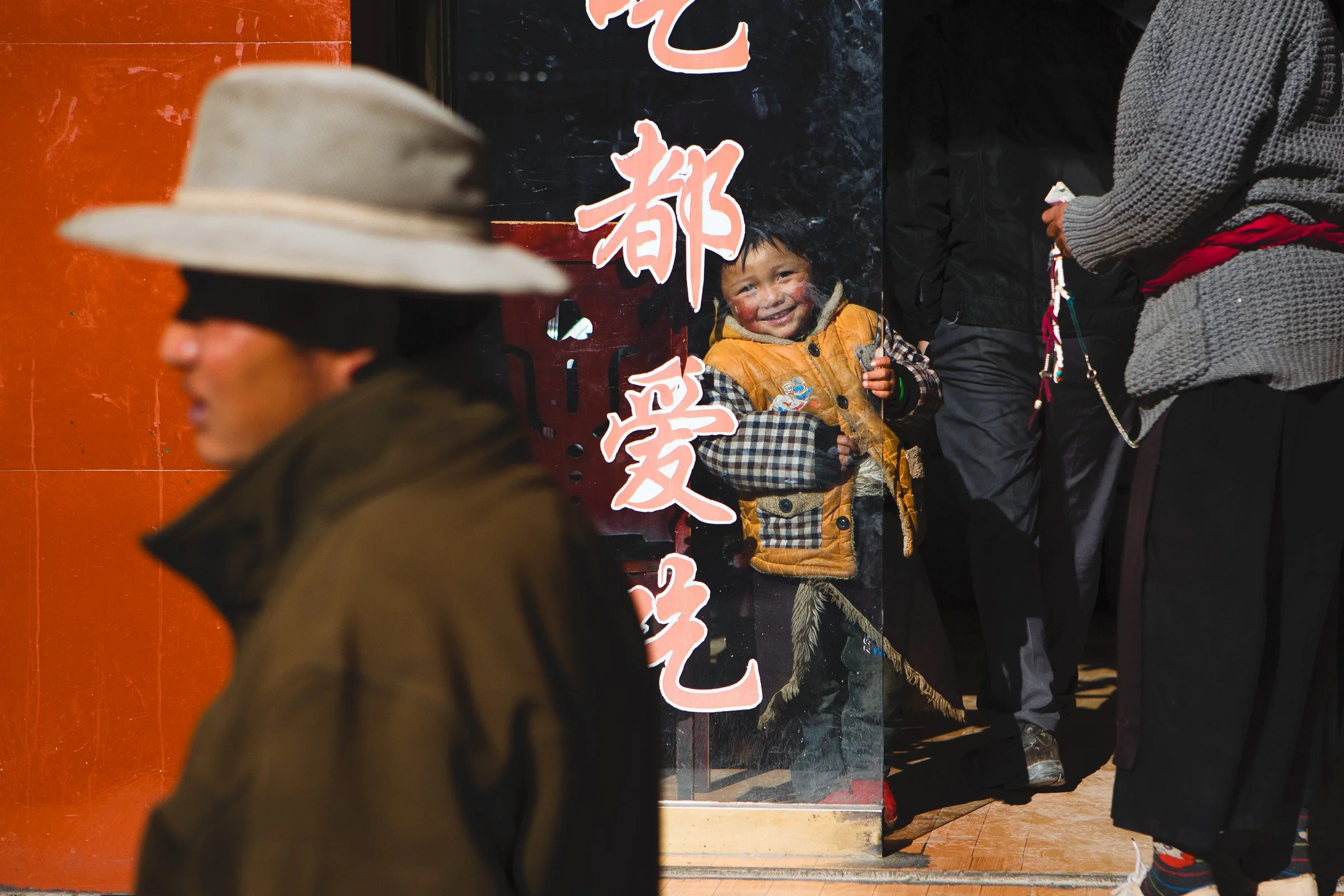
In 2013, a fire destroyed the main prayer hall of one of Tibet's most sacred monasteries.
I arrived unsure what I would find. Was there tension, like what I'd seen in the news? As a Han Chinese, would I be looked at with wary eyes?
GRASS ON THE
MOUNTAIN
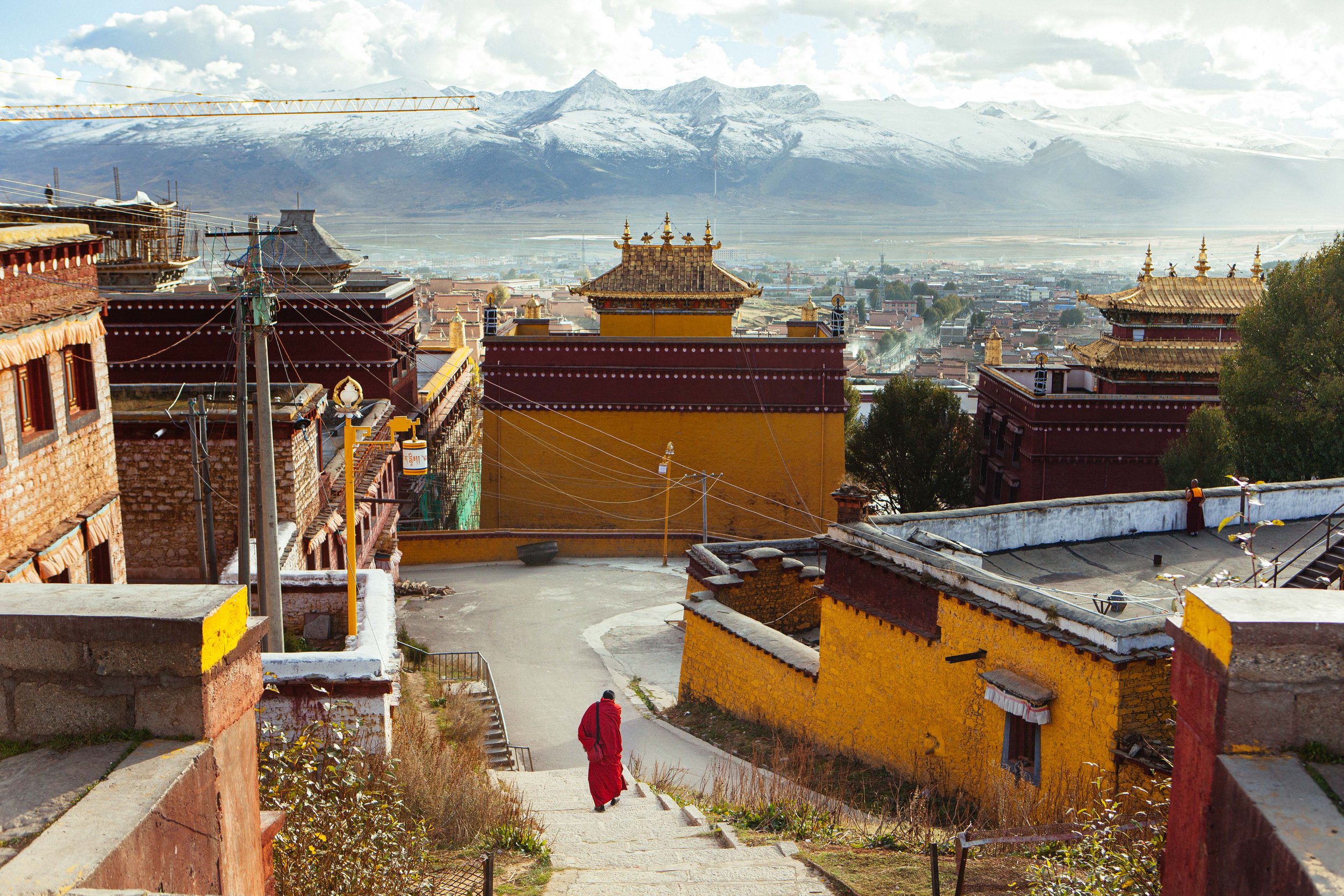
At 13,169 feet above sea level, Litang is one of the highest towns in the world. It’s situated in the historic Kham region of Tibet, and for centuries, it has operated as a trading post for Khampa nomads.
It's also the birthplace of two historical Dalai Lamas and home to the 400-year-old Ganden Thubchen Choekhorling Monastery.
I arrived in autumn 2016, on the heels of the first snow. I was both excited and nervous. Litang on the whole felt more traditional than commercialized Lhasa.
But I was nervous too. As a Han Chinese, I knew about ethnic tensions. Litang sat at the crossroads of much that was complicated about modern China. Would I be welcome here? Or would people see me as part of the problem?
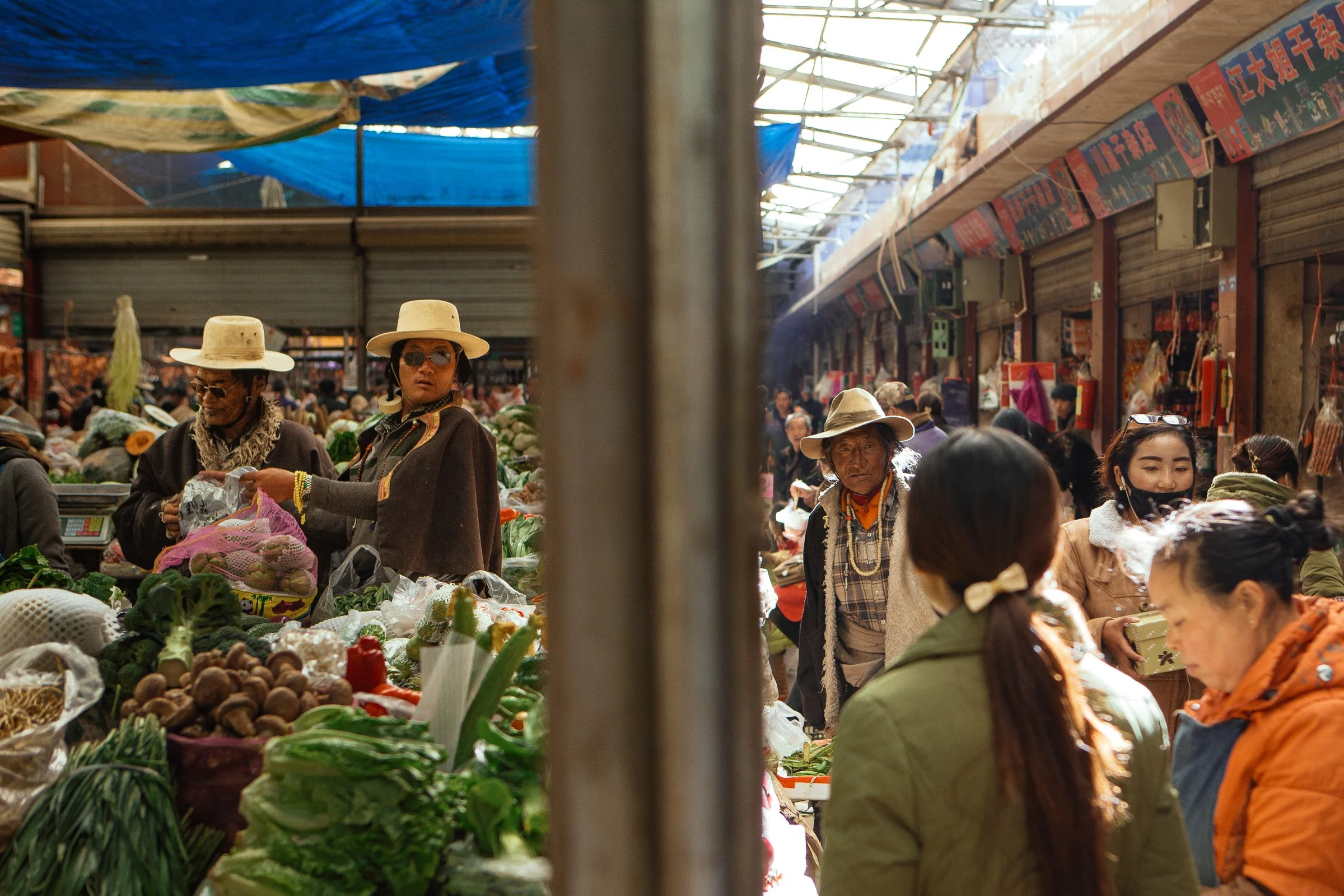
A busy outdoor market filled with vendors and shoppers. Vendors are selling fresh vegetables and produce, with stalls on either side. The market is covered with a roof made of blue and transparent tarps, and people are wearing warm clothing, some with hats and masks.
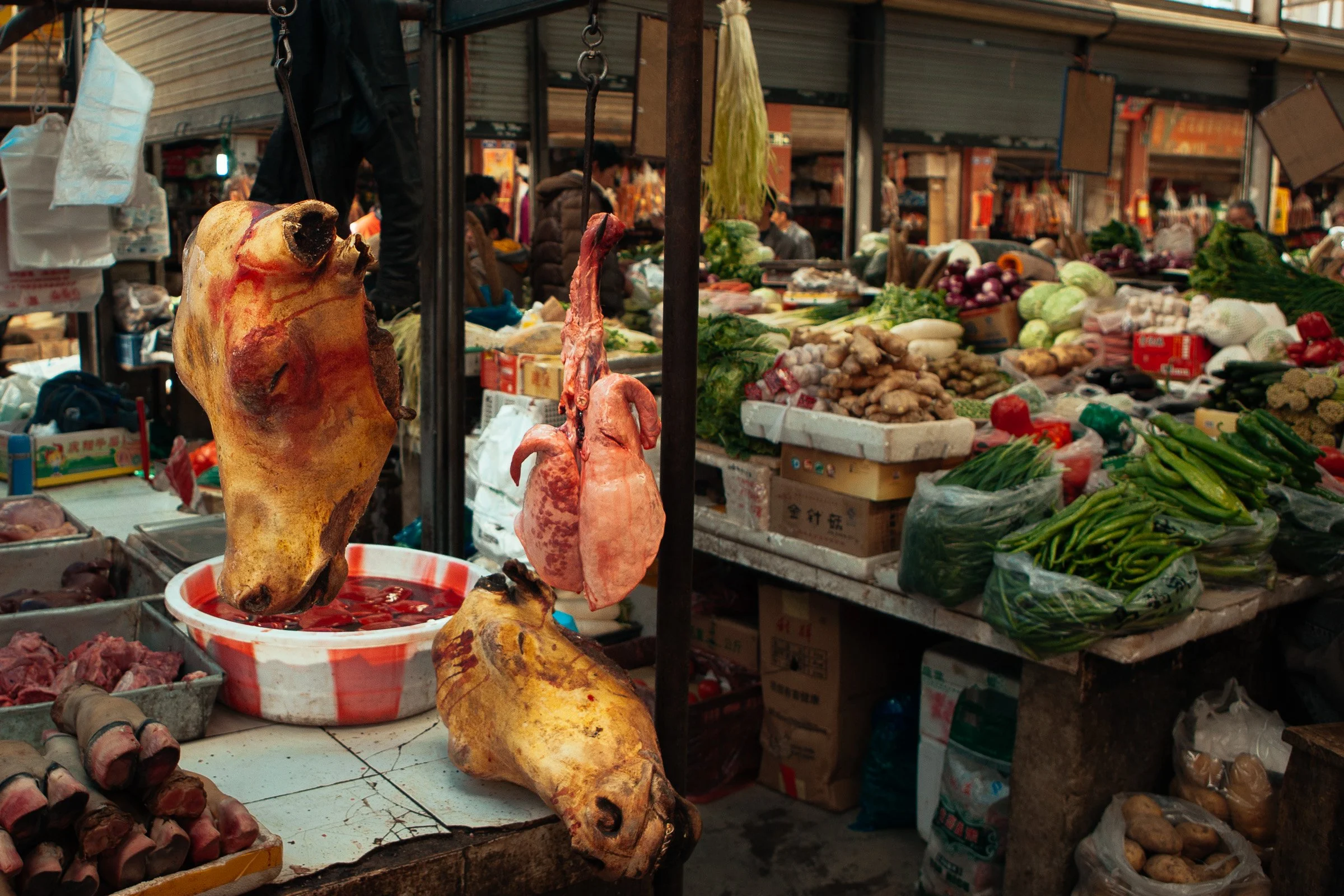
A marketplace stall with hanging animal heads and other meats, surrounded by boxes and piles of vegetables.
Walking through Litang’s wide streets, you can see clearly that they are meant for cars. Yet few here own them. Many of the streets are brand new or under construction.
You feel as if you are in a city in the midst of remaking itself, a city preparing for a future in which people no longer walk. It is dusty, and every street corner seems to be a construction zone.
But for now, the people still walk.
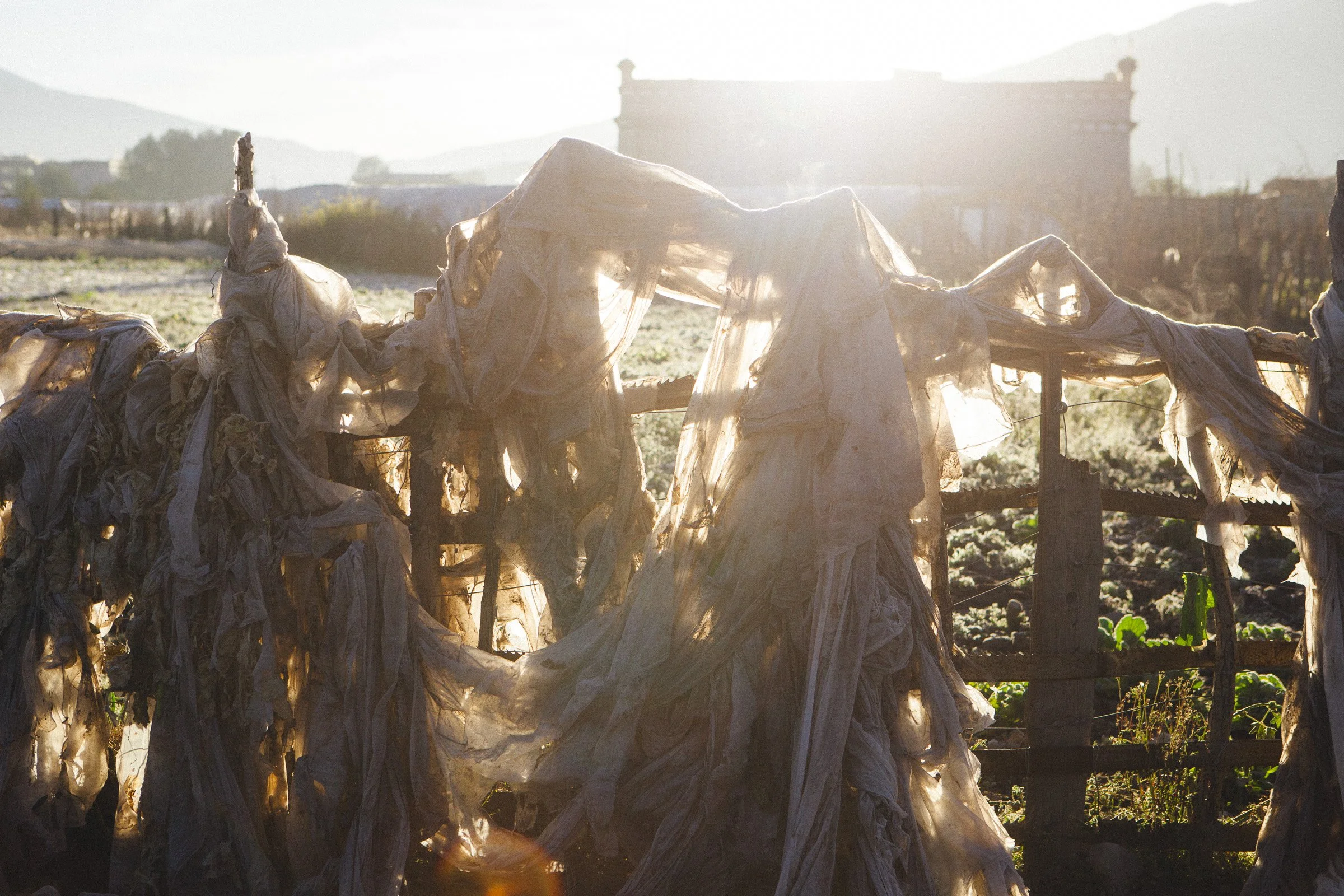
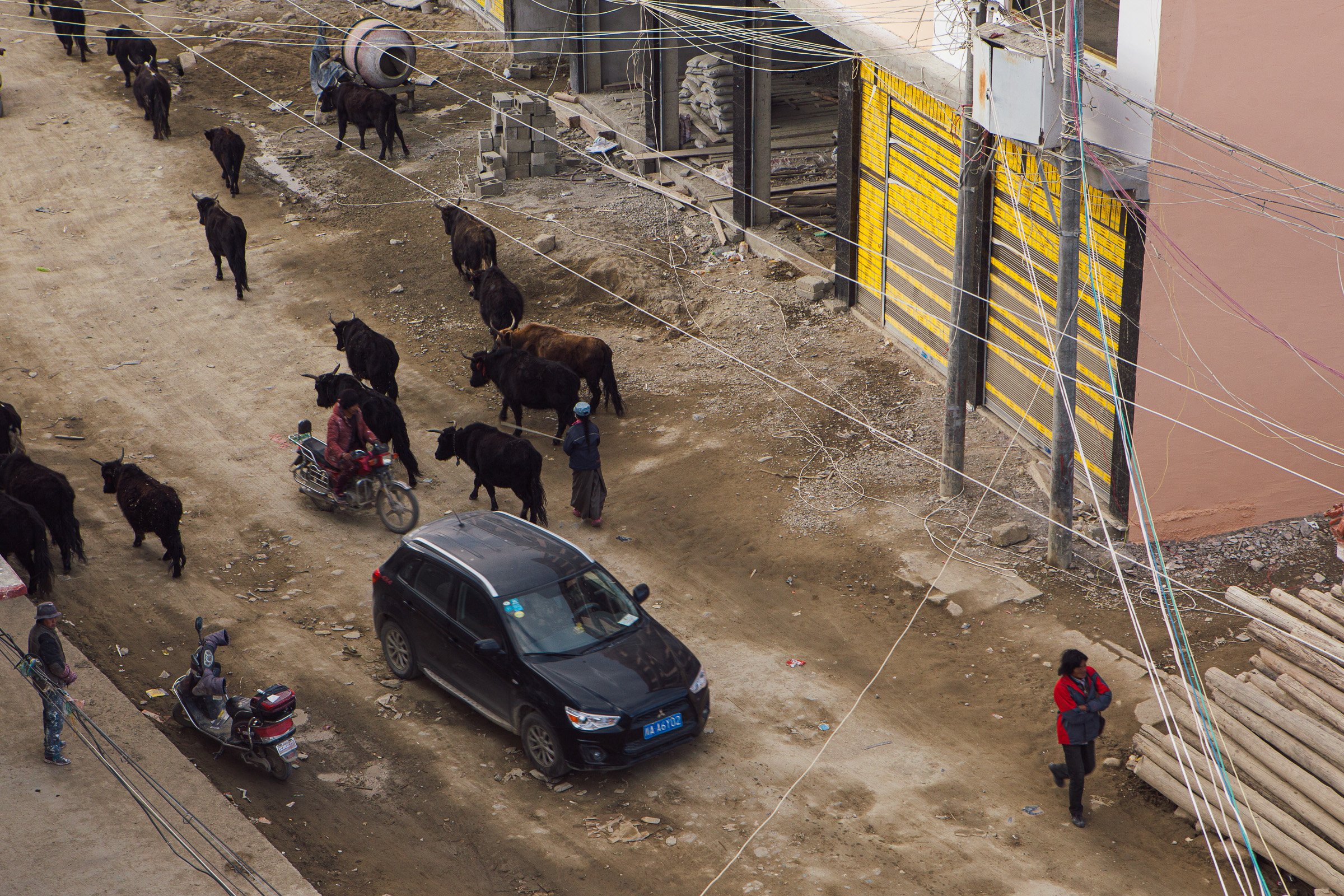
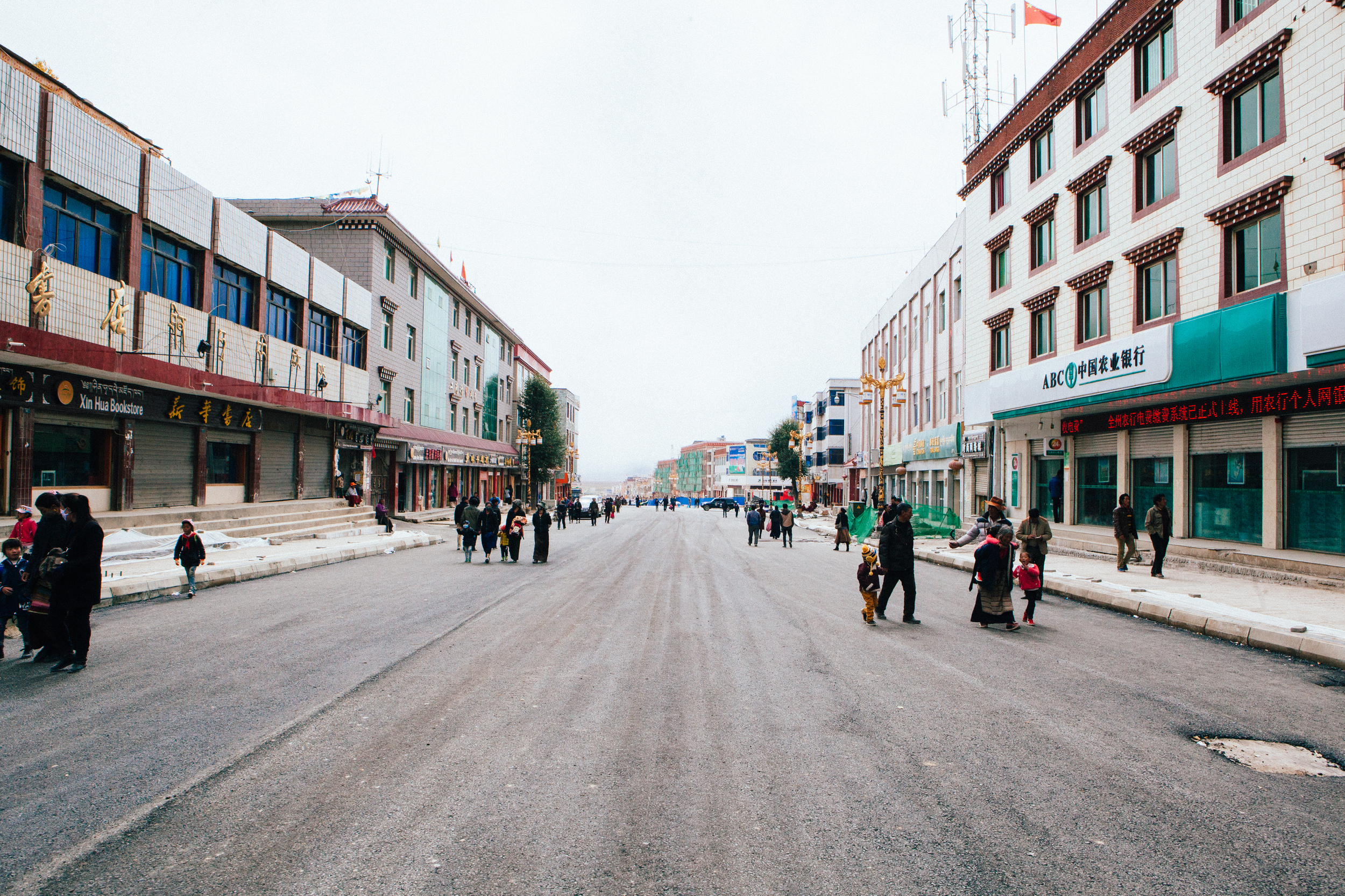
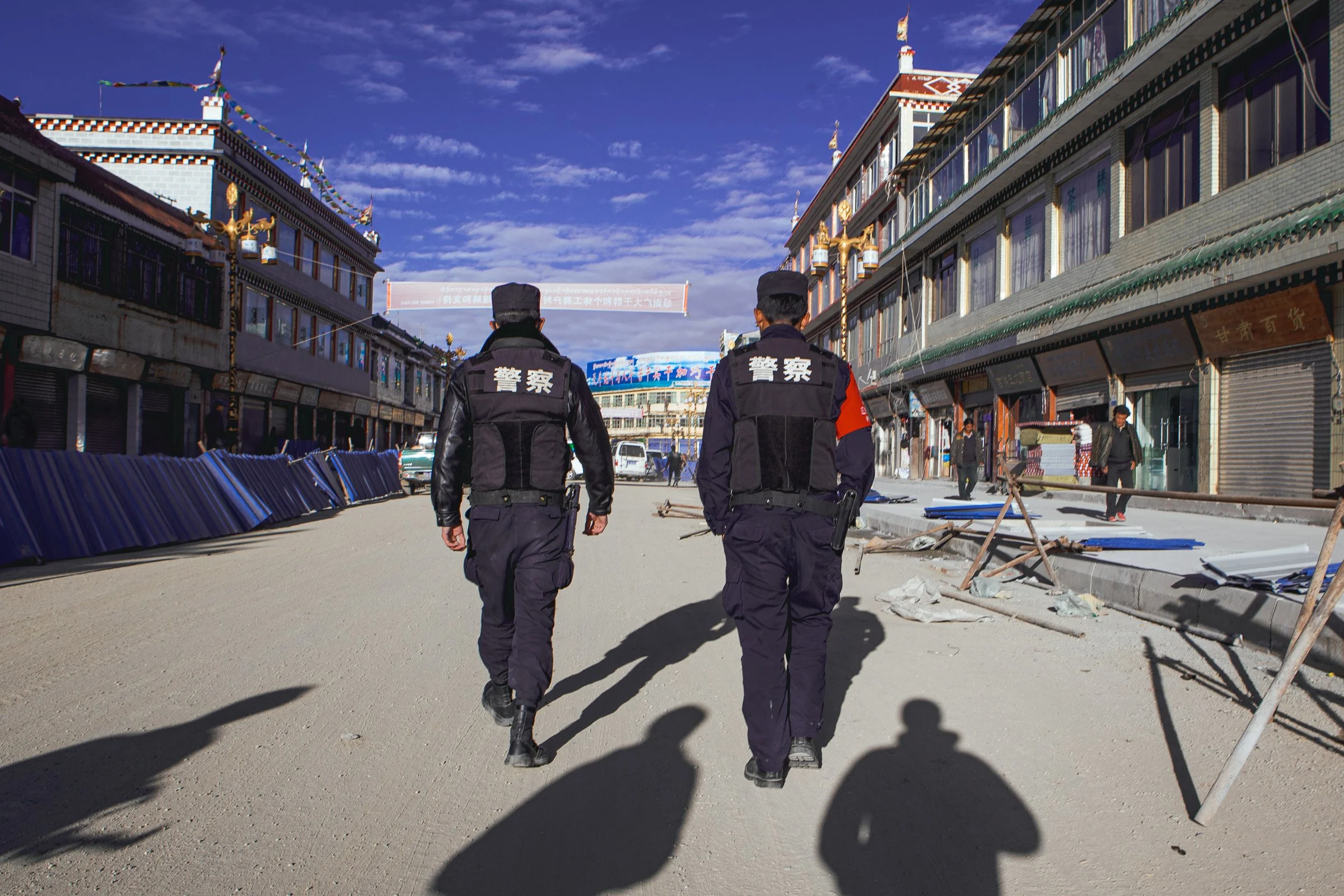
The monastery sits above the town like a fortress. As I climb the stone steps, my heart pounds in the thin air; it feels like a softball in my chest.
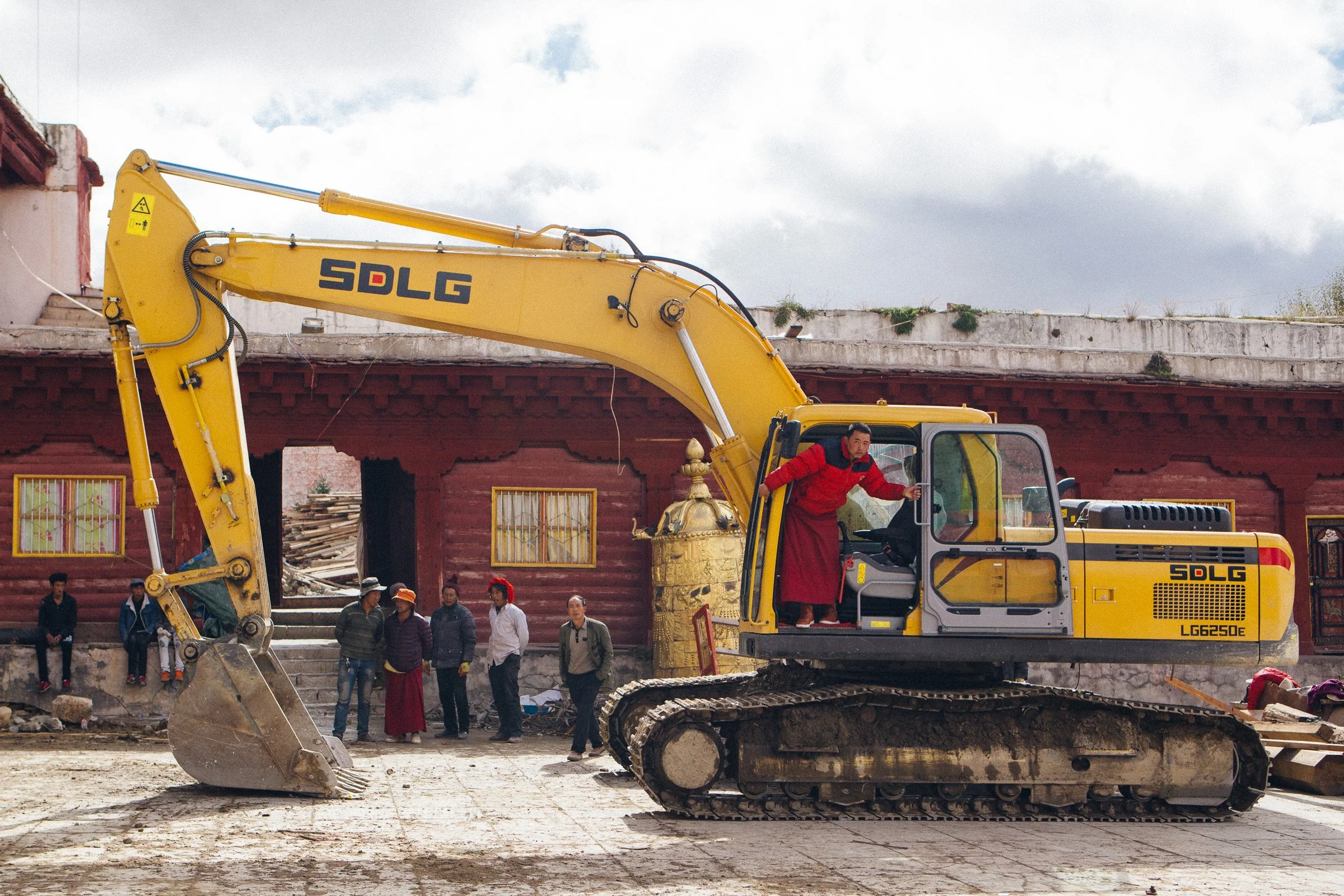
Arriving at the main gate, I walk through to find the courtyard has also become an active construction zone. Vehicles come and go, some operated by Han Chinese migrant workers, others—I'm surprised to see—by monks.
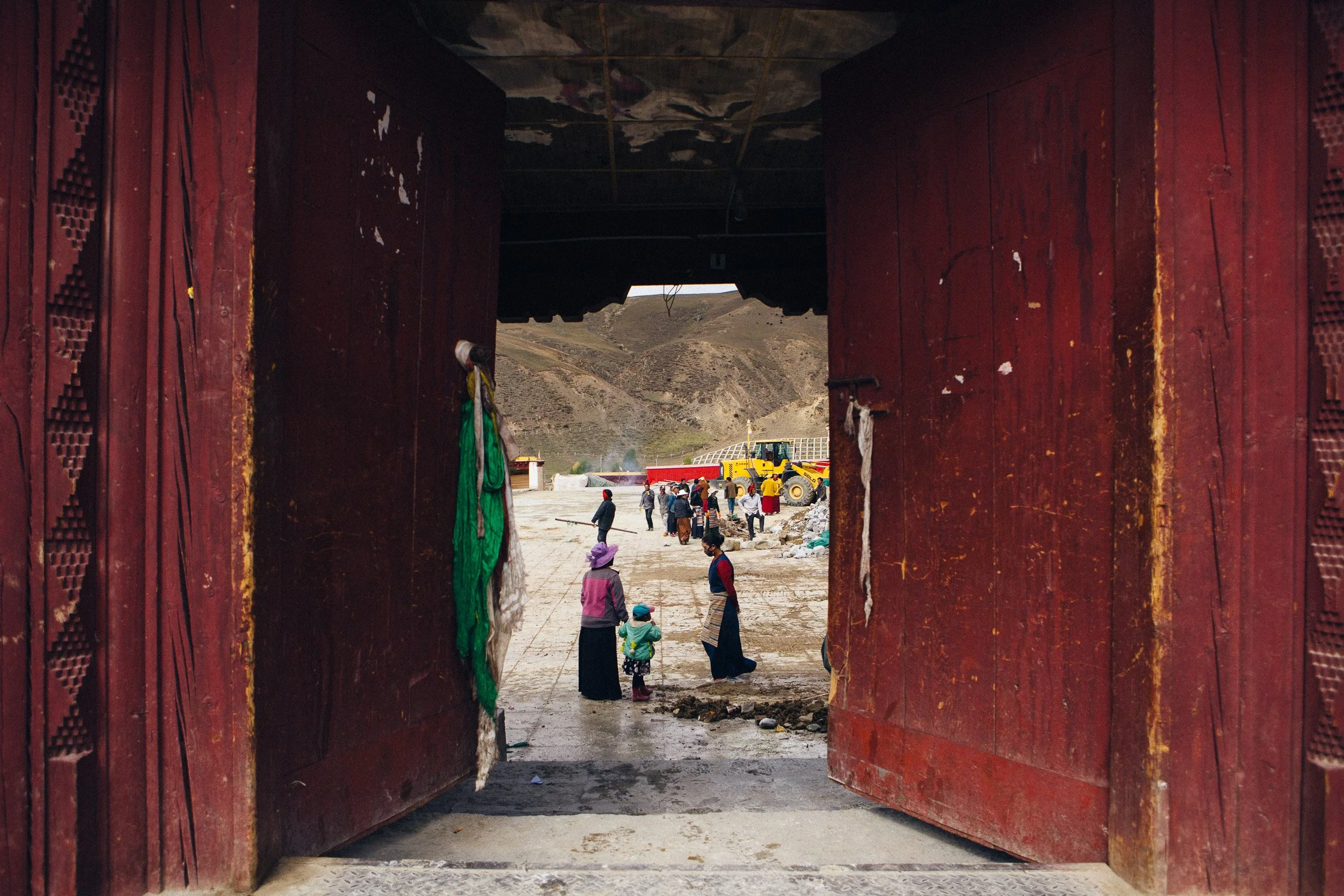
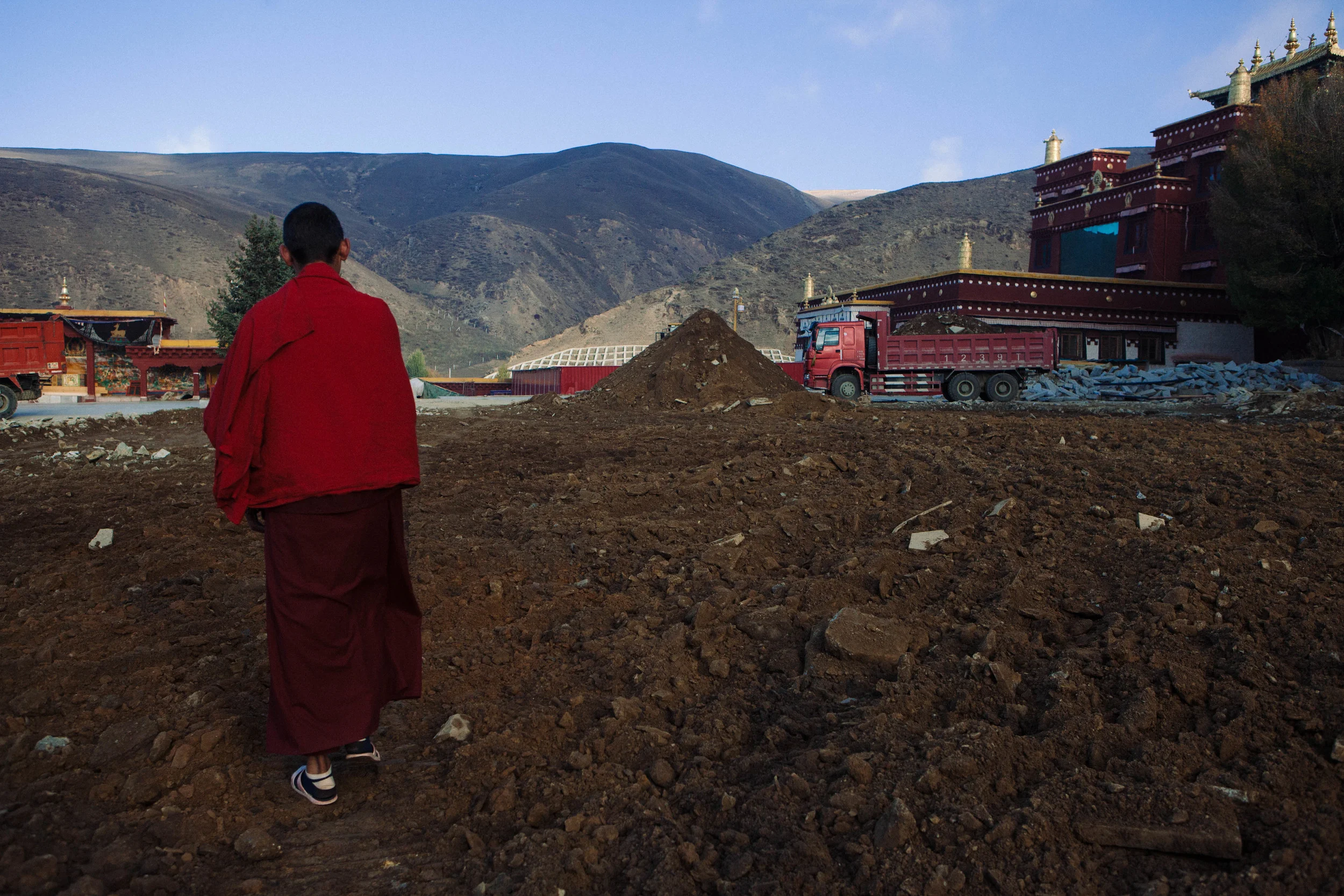
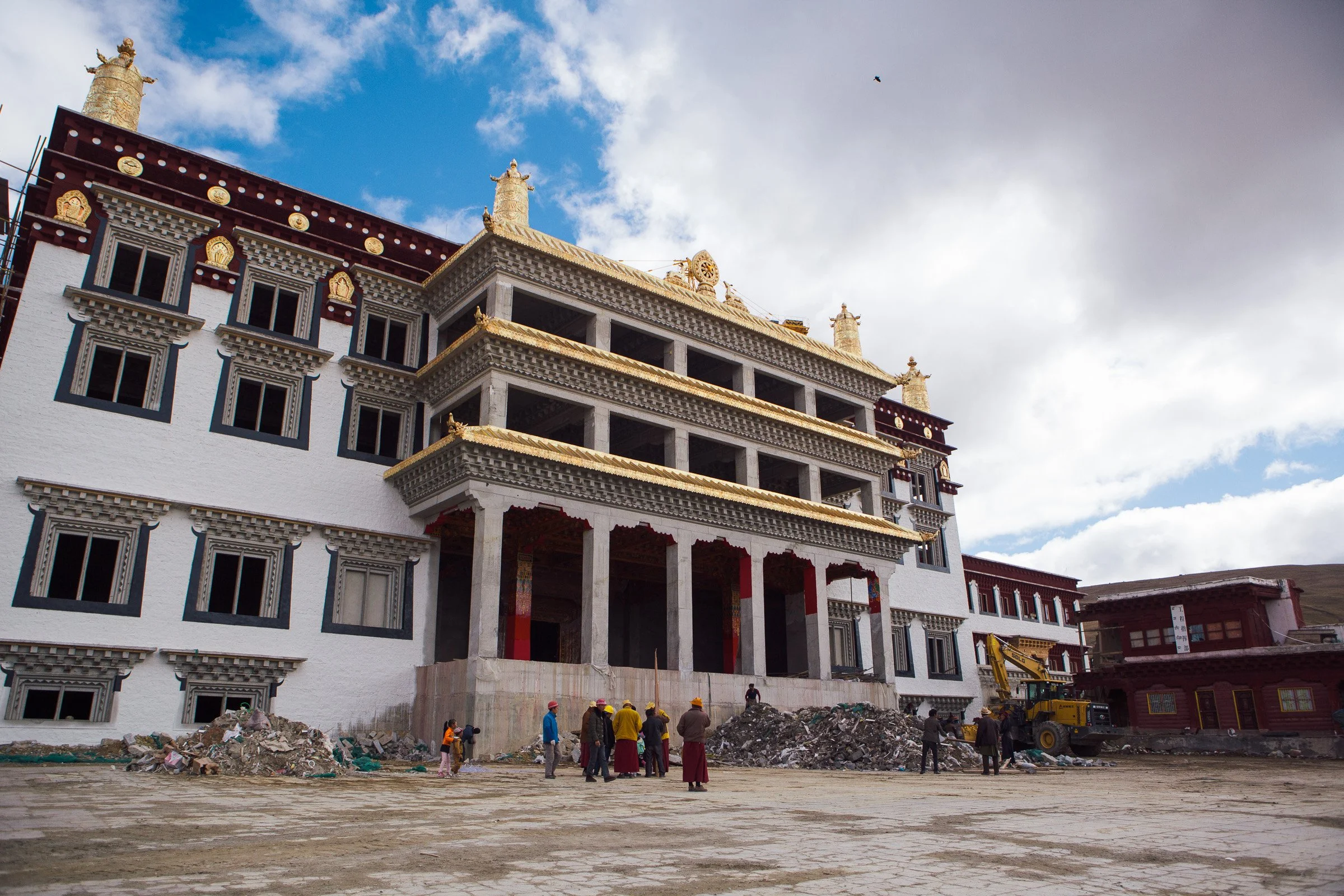
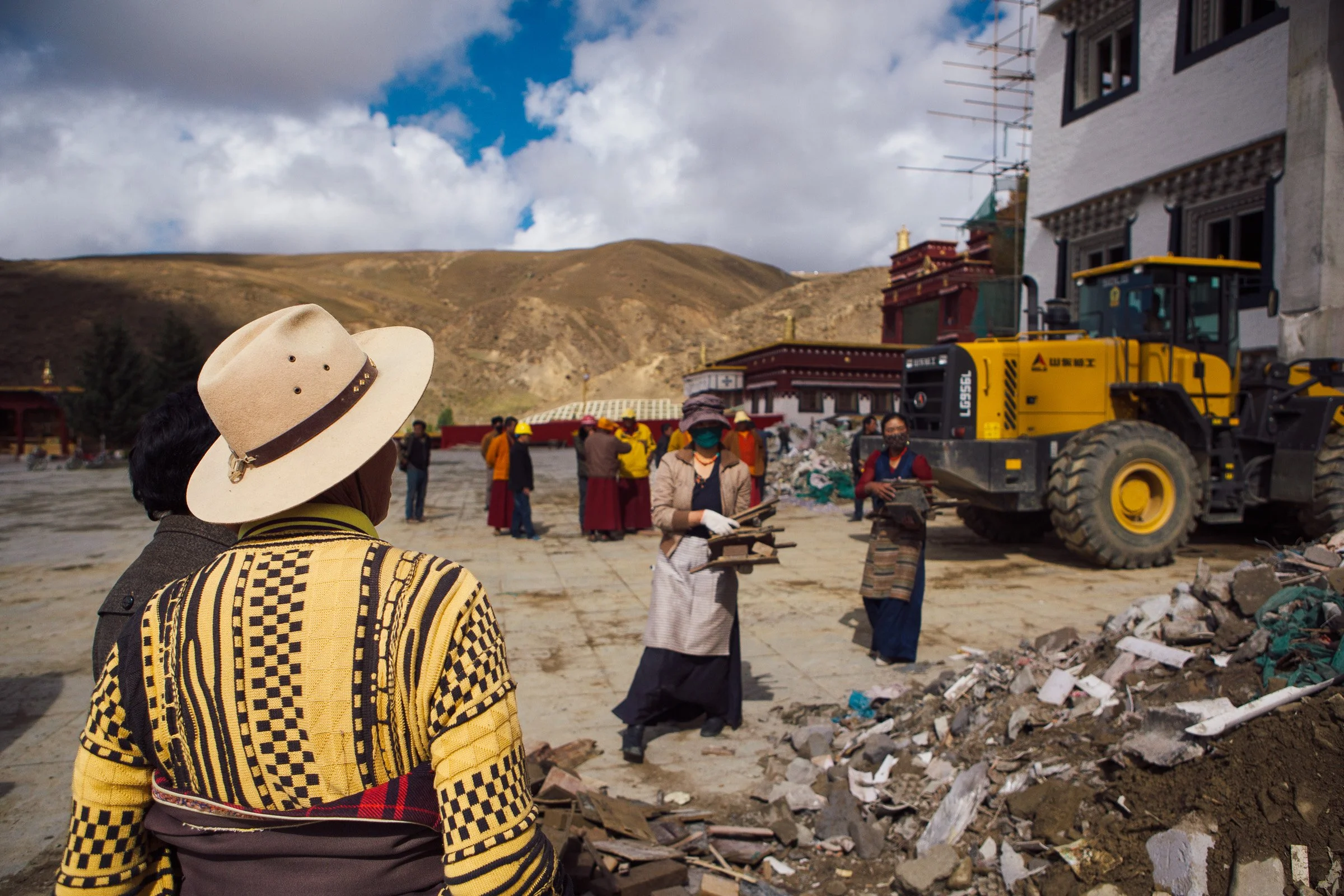
The workers break for lunch. A few of them motion for me to join them.
I sit across from them as they remove their masks and unwrap cold homemade dumplings and fruit.
They ask me in broken Mandarin where I'm from and what I'm doing here. I tell them I've wanted to visit this place for a very long time.
One of the women motions to another to hand over the plastic container of dumplings.
"Eat with us."
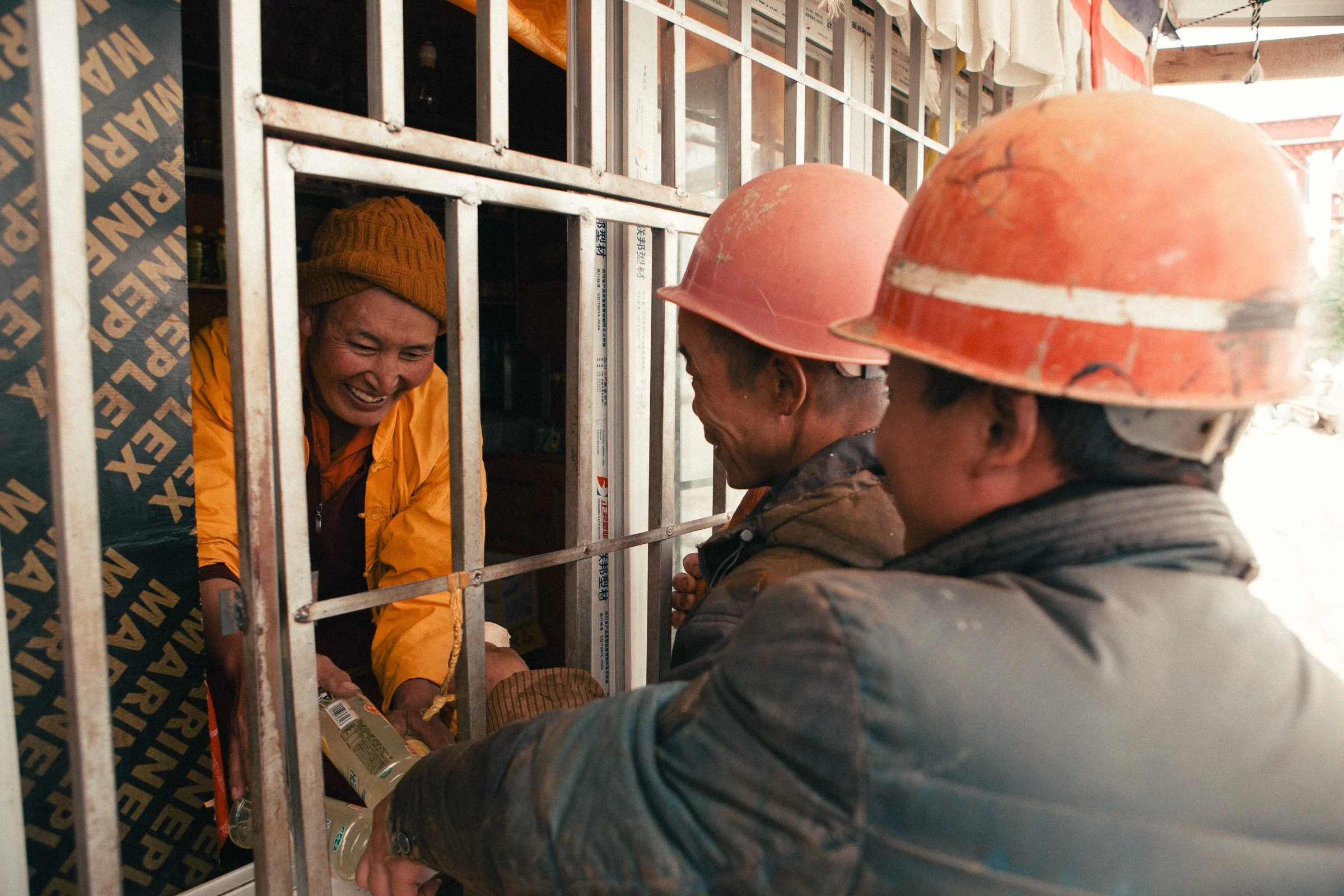
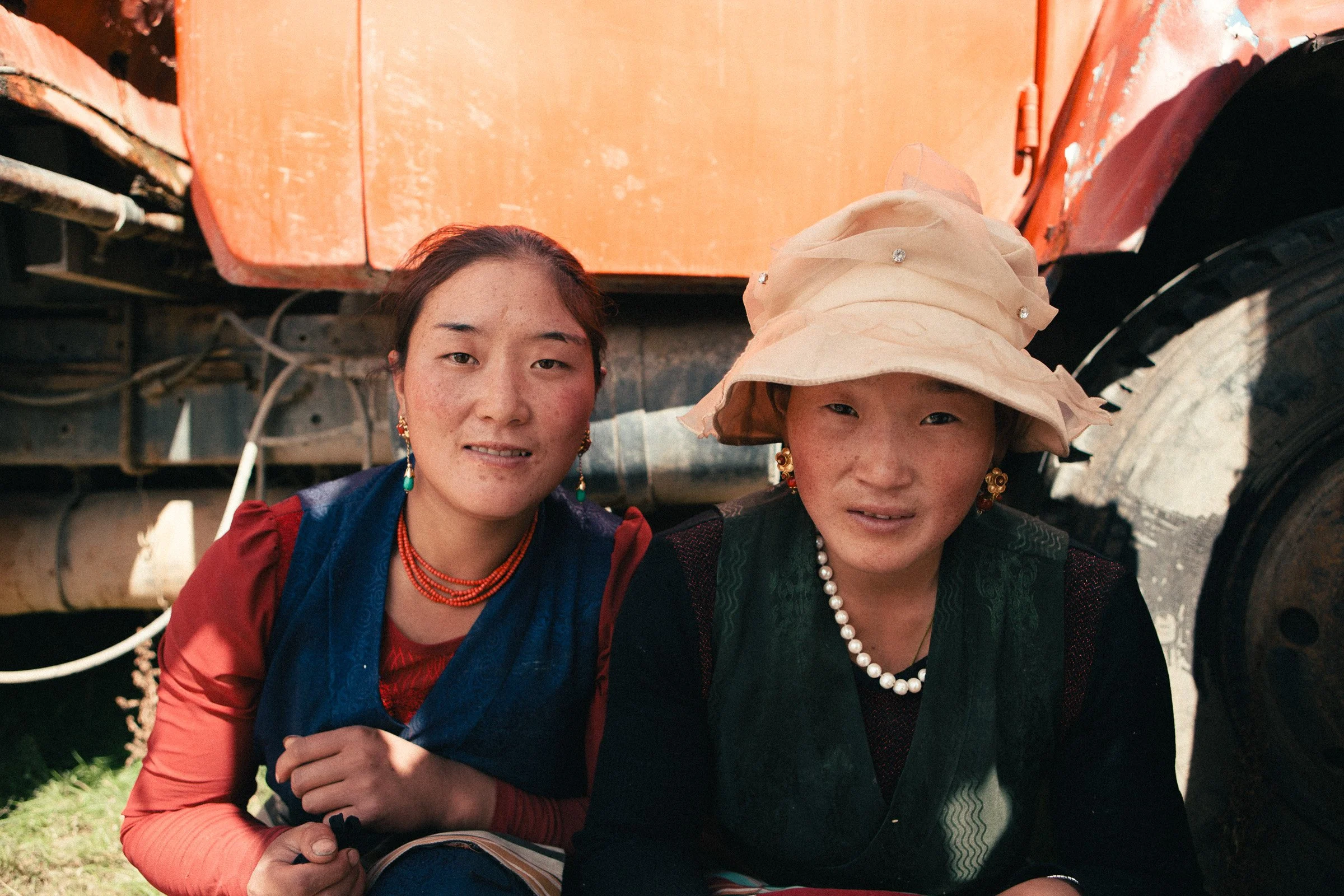
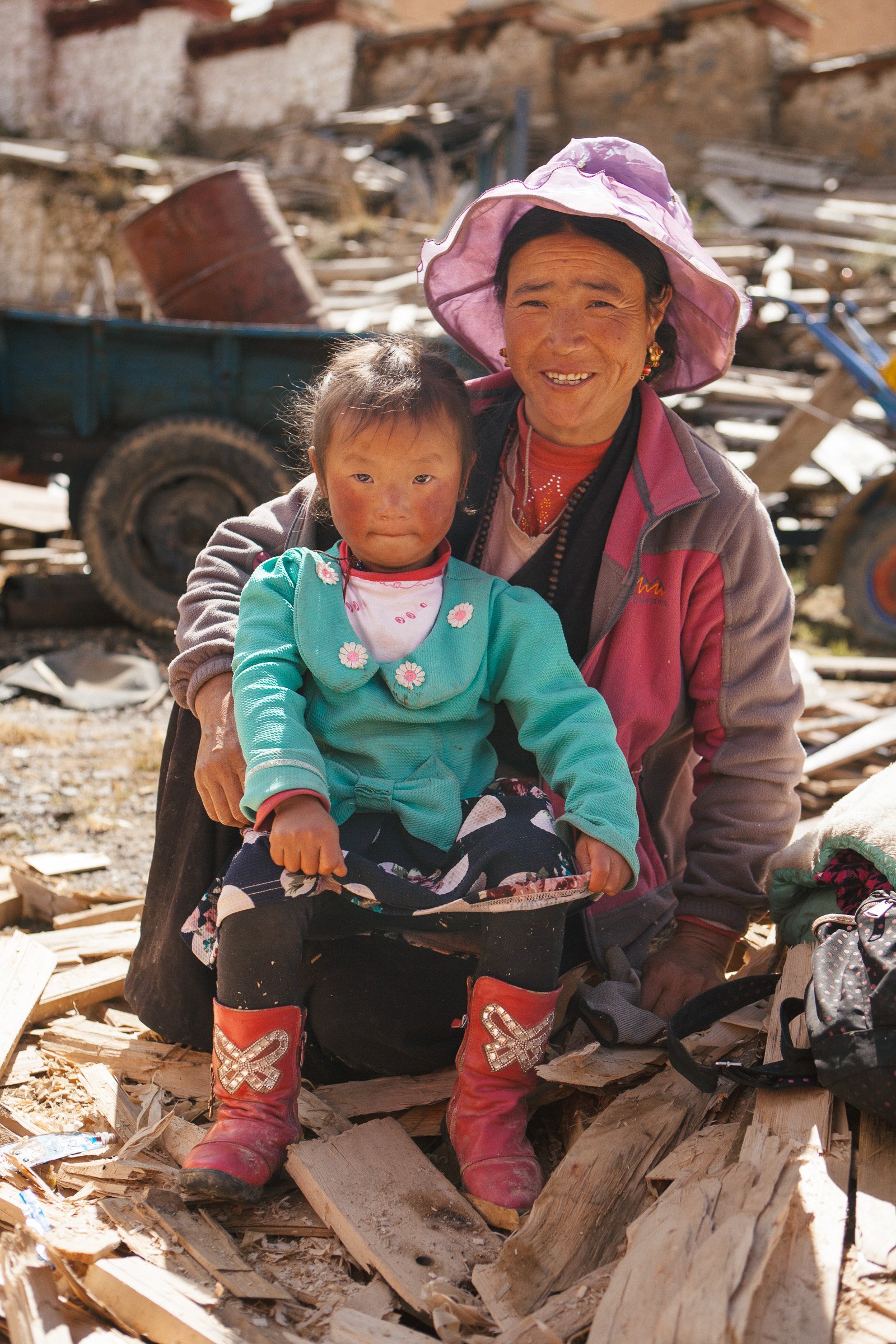
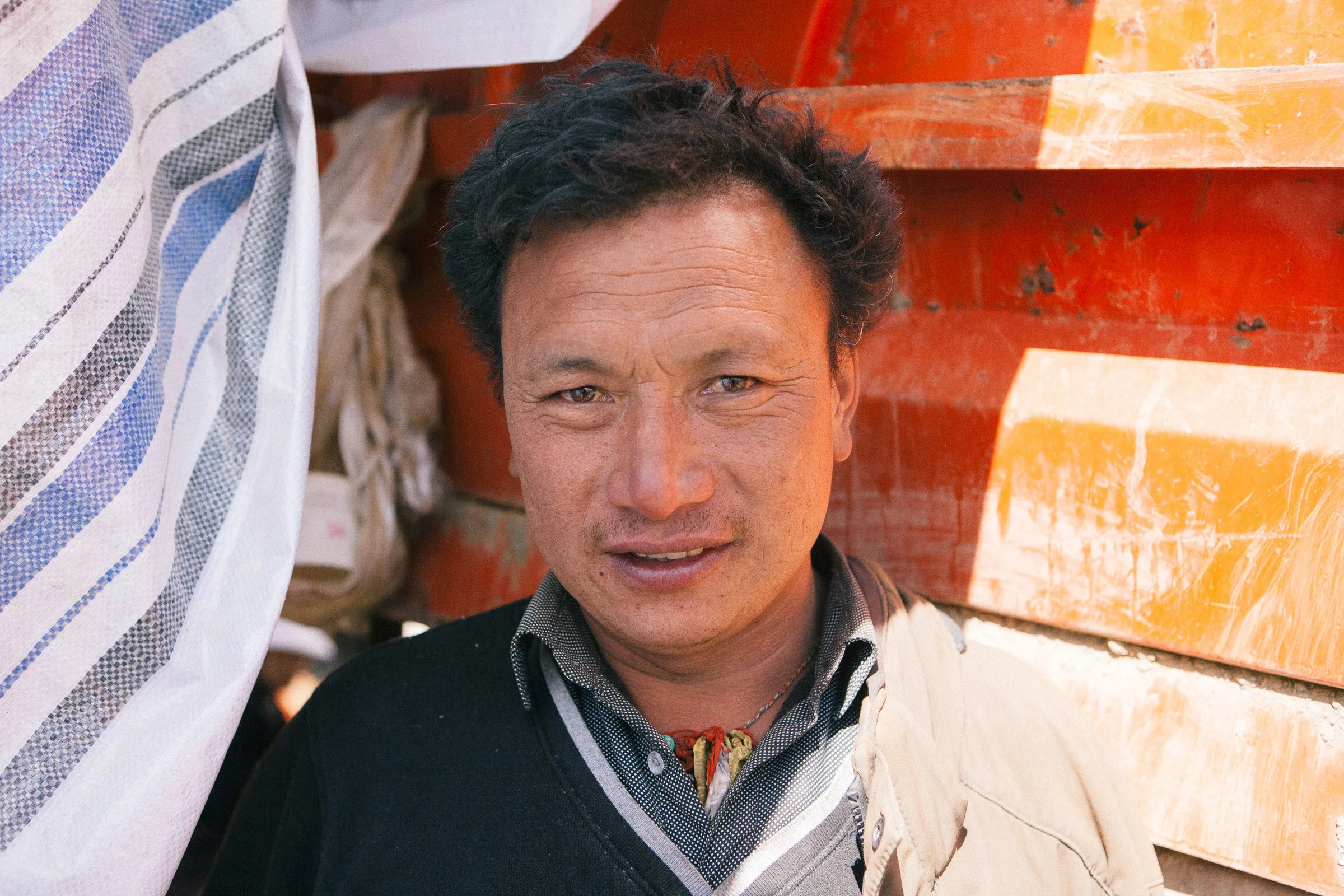
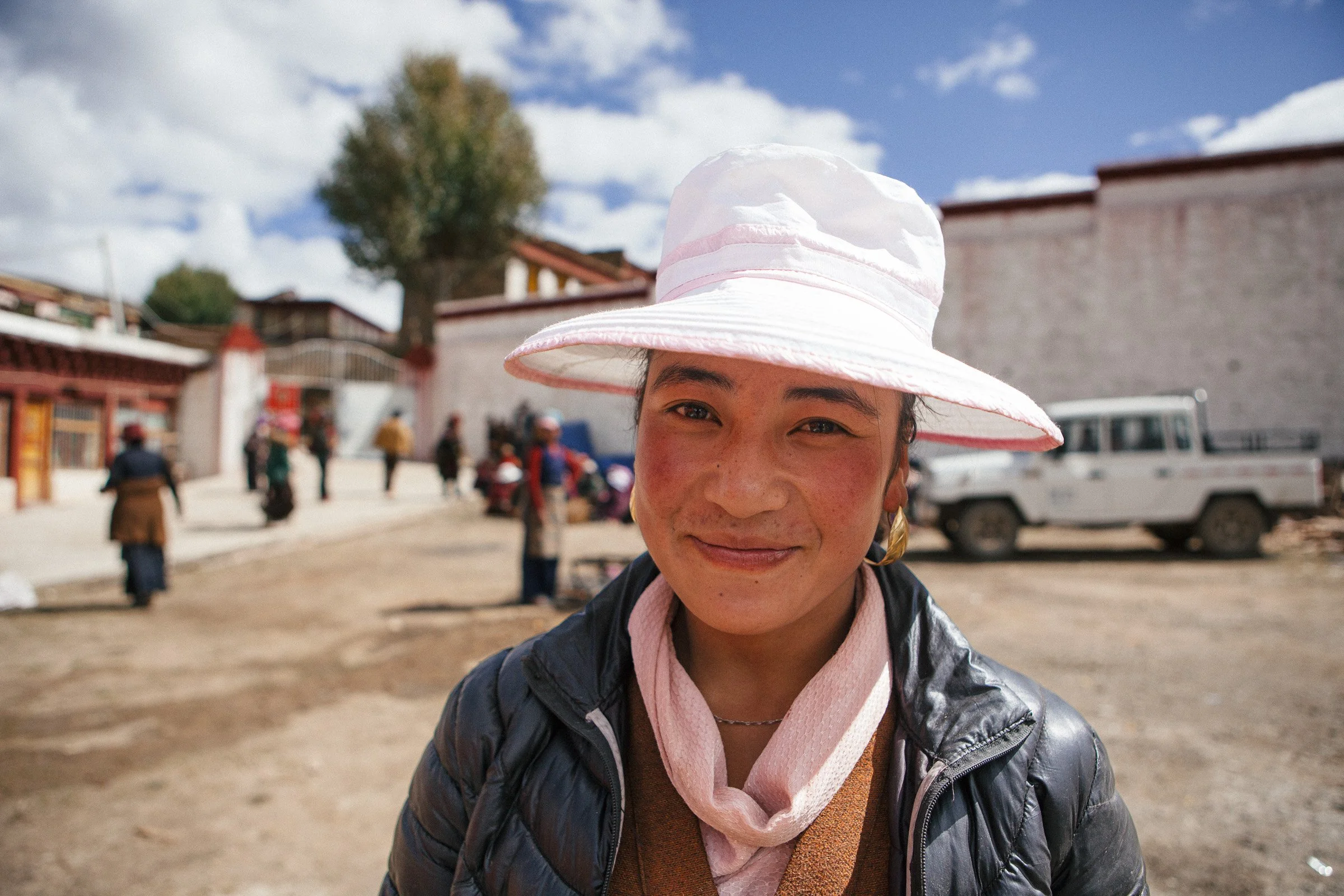
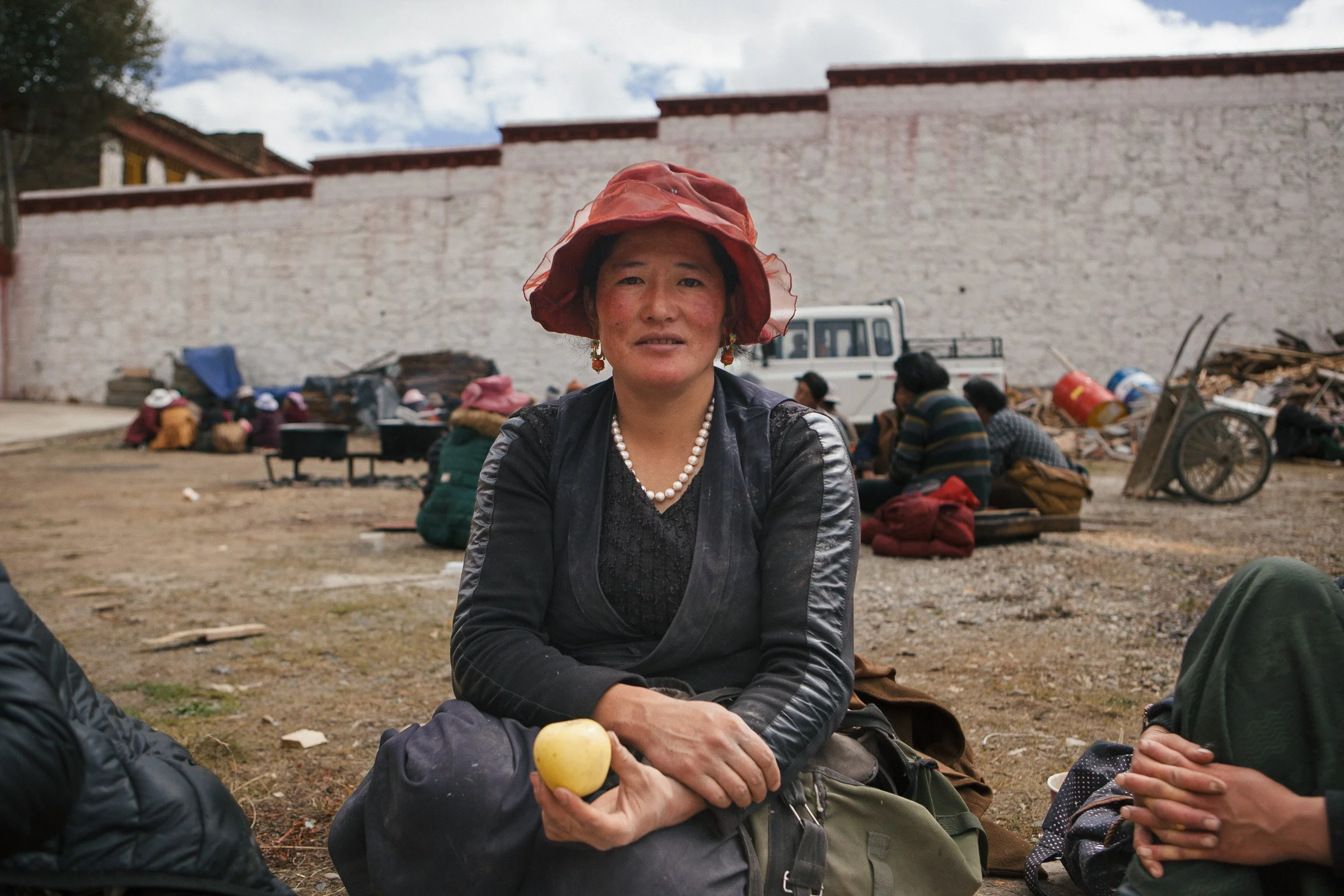
I take a bite; beef filling. I notice the cement dust covering their bare hands. When I gesture toward the construction, asking if this is their job, they shake their heads.
"We come when we can," she explains. I ask for a photo of the volunteers all together, and take down their contact information to send them the photo later.
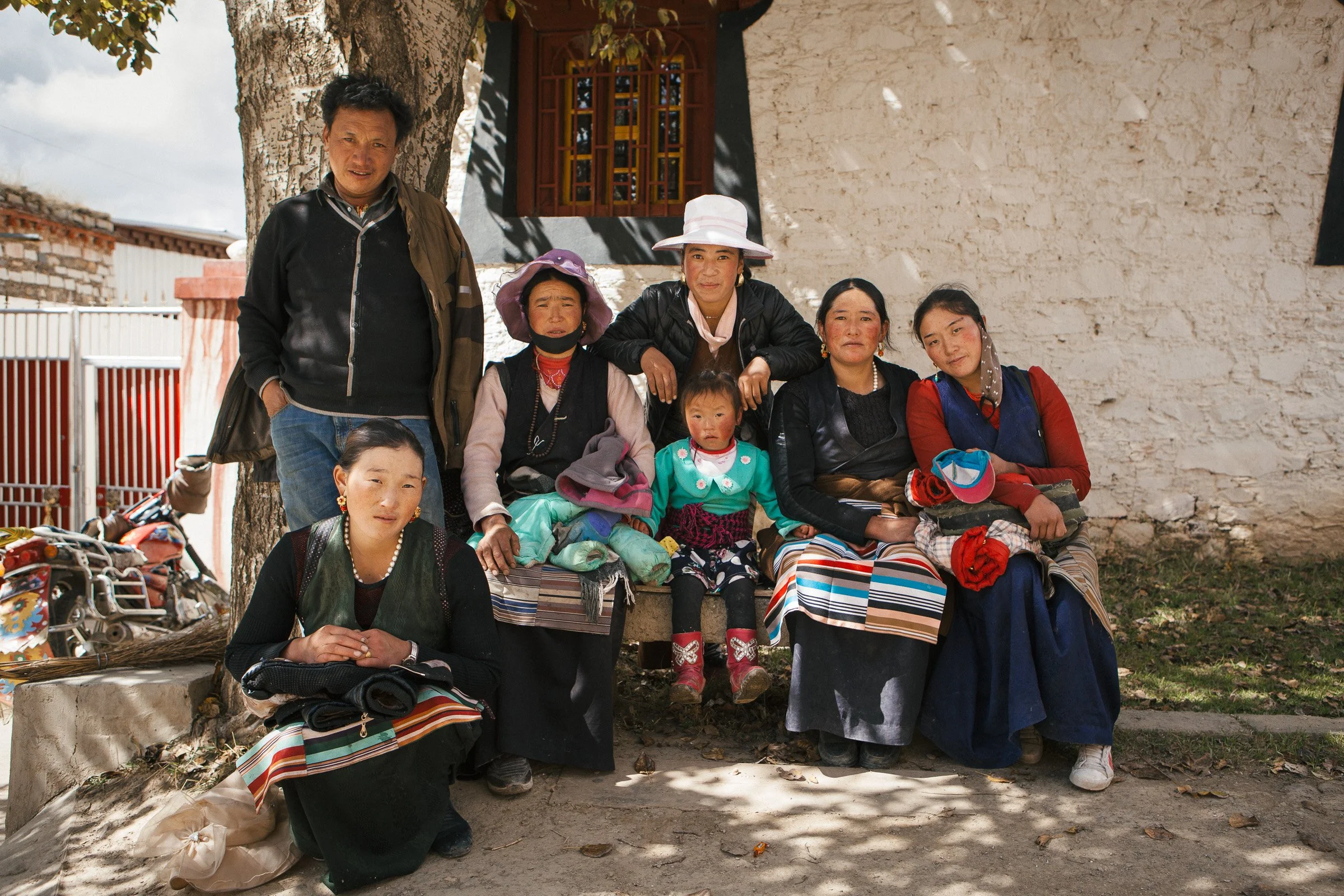
I gaze toward the central building and ask if I can see inside. The workers exchange glances. One nods.
"Just go in. Not much to see."
I go in anyway. There’s no door yet, so I walk straight through and step into the dim interior. There’s a man cutting wood. He sees me and points upwards.
“There’s more upstairs.”
I follow up the bare concrete stairs toward the sound of voices echoing from somewhere above.
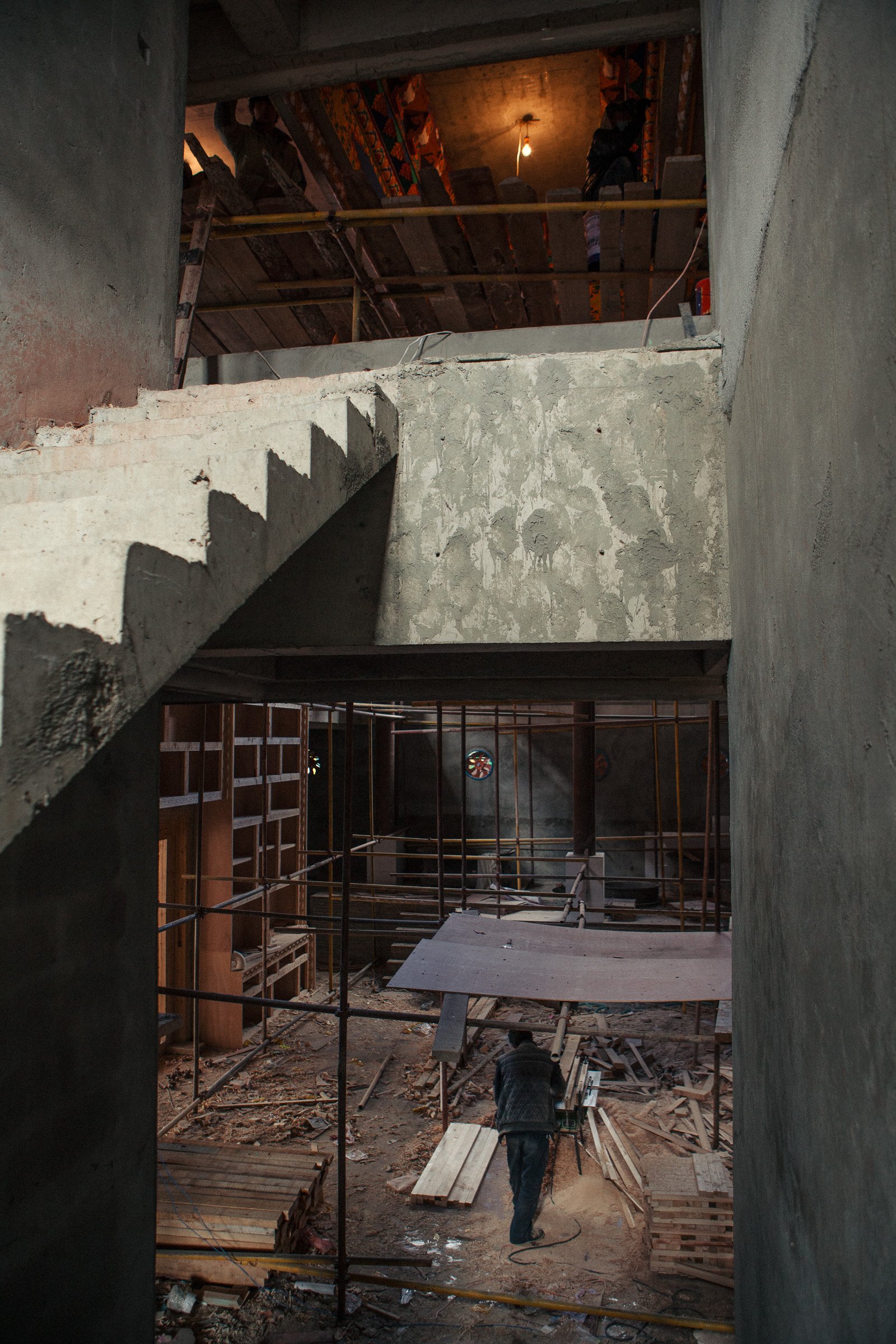
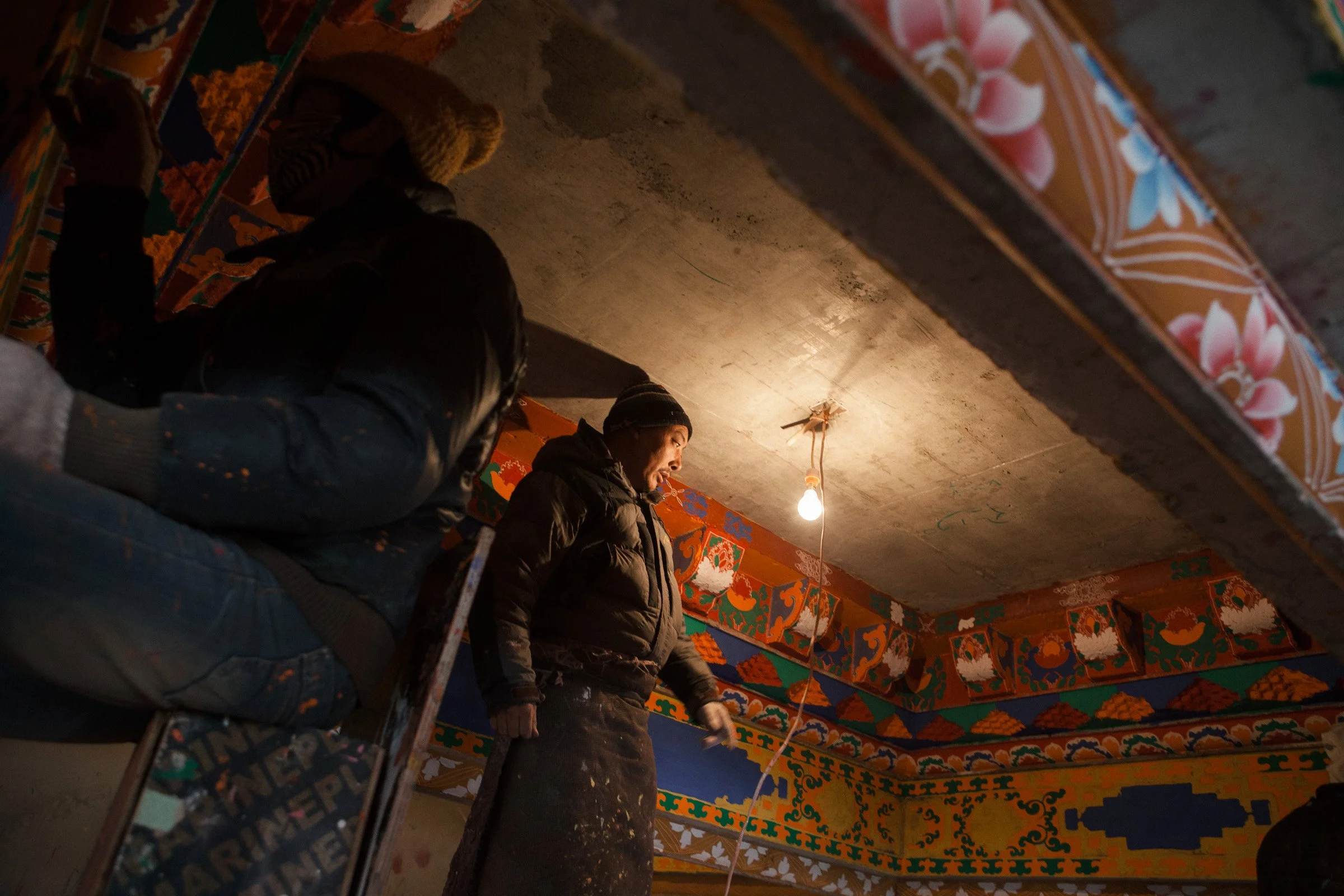
The painters are perched a few wooden planks suspended on rickety piping. Looking down, I see that we’re 40 feet above the stone floor. So that's what the man downstairs was cutting…
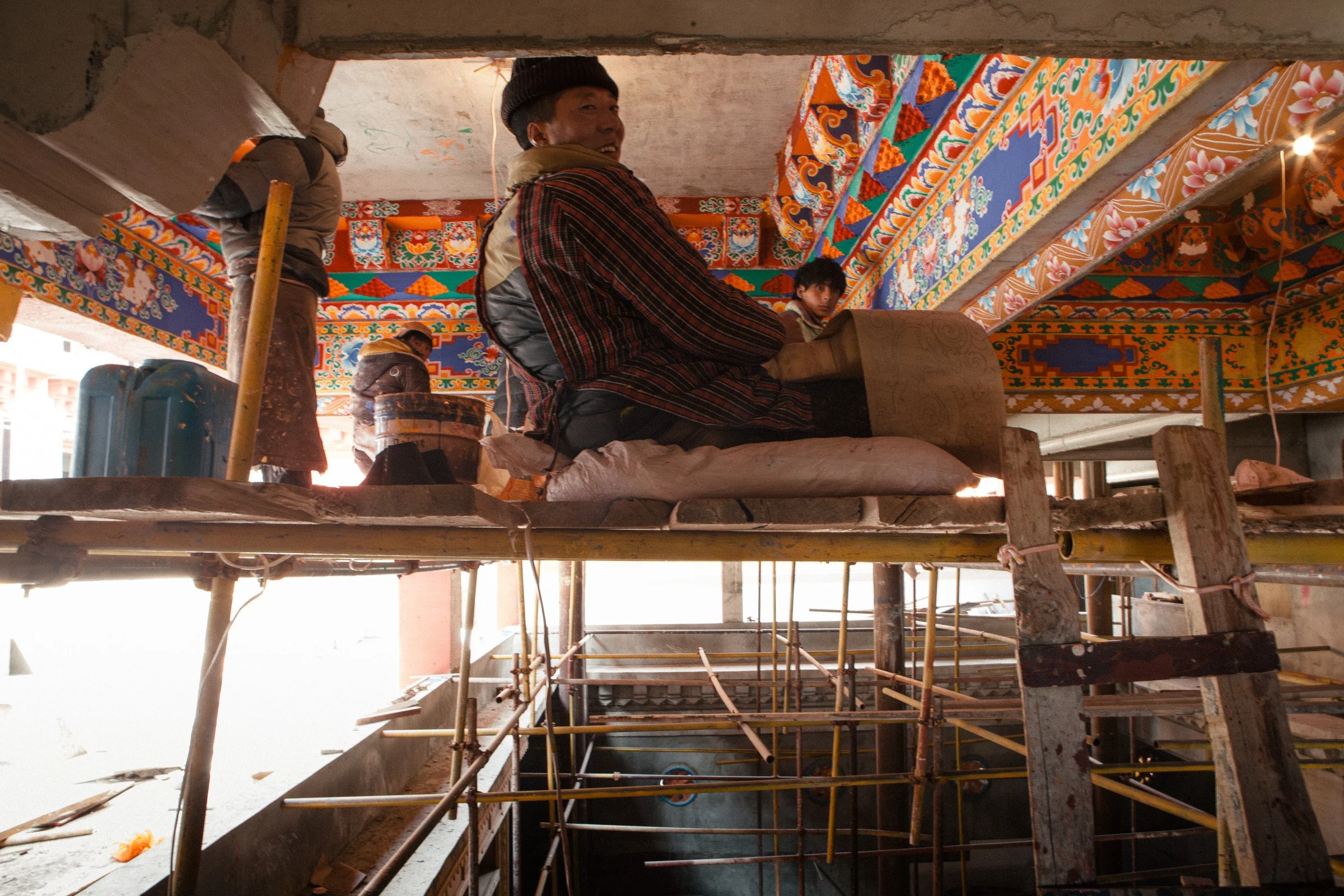
The men walk with confidence, even as the planking creaks. They motion for me to come up and join them. I hesitate, but then tell myself when am I going to be doing this again? I swing my camera behind me, and climb up the ladder.
The drab concrete blooms into a world of color.
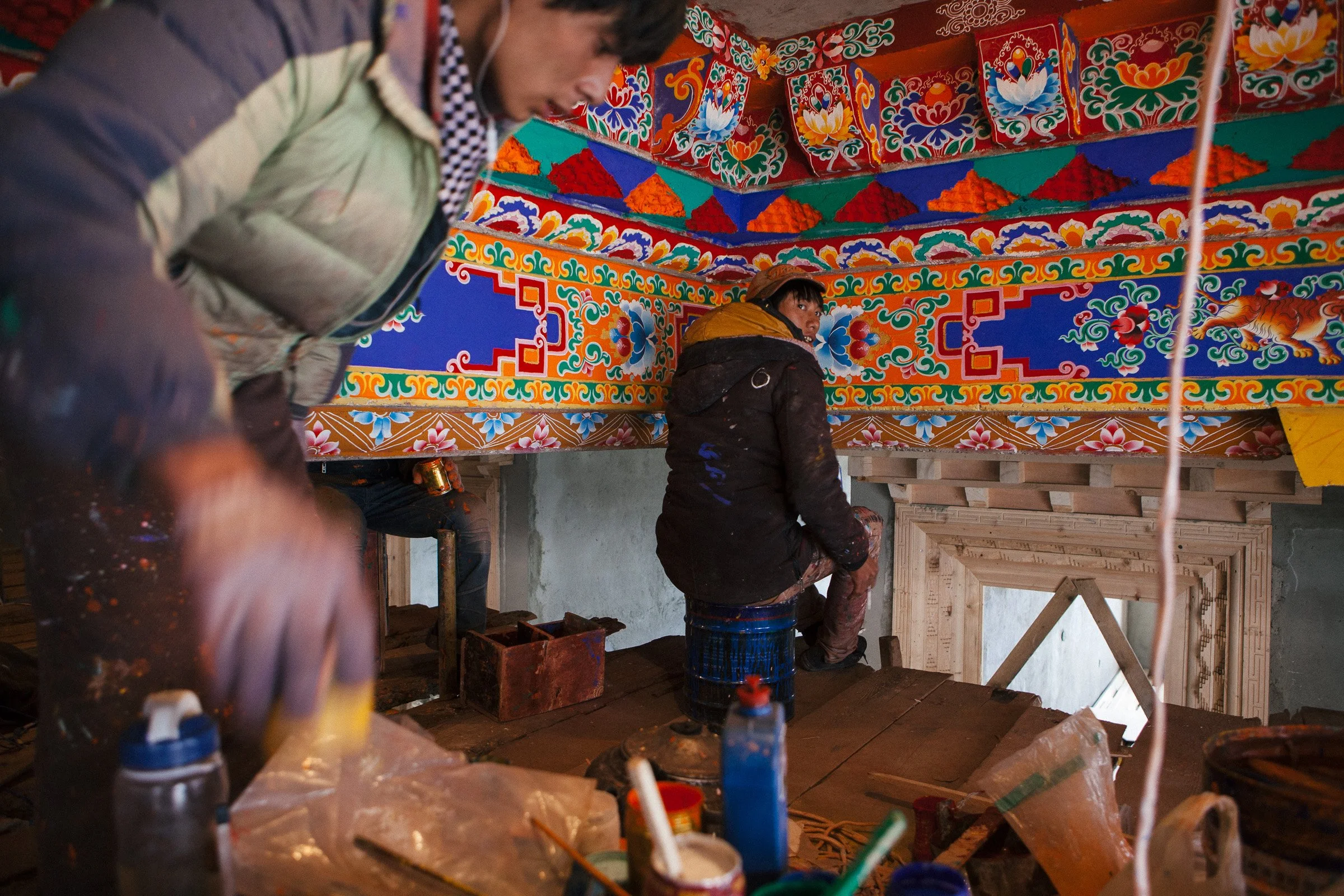
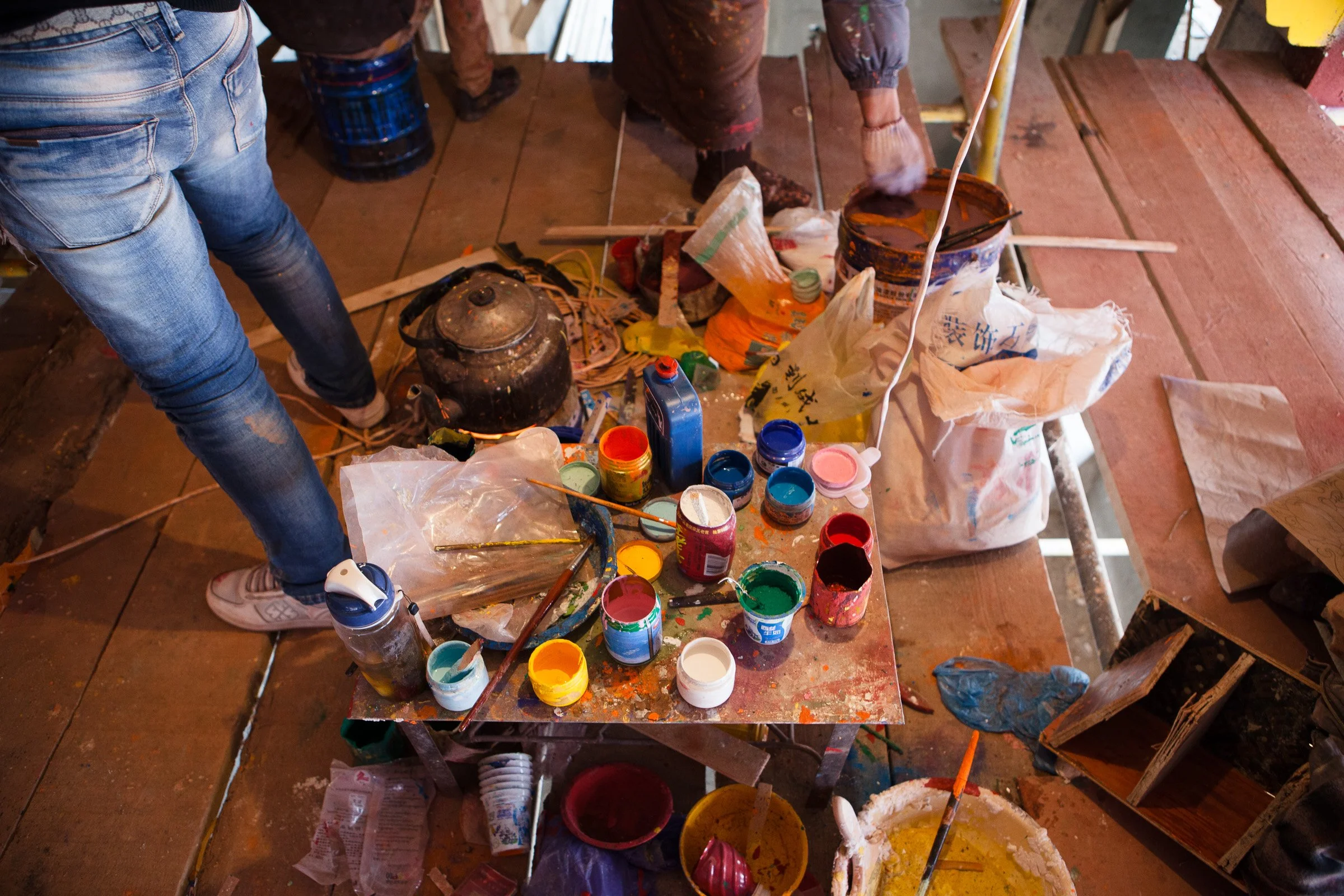
The men are from the town of Kangding, a few hundred miles away, and they specialize in monastery painting. Twice a week, every week, they travel to Litang to slowly layer color onto these bare concrete walls. Seeing the bare concrete filled with color reminds me of the Buddhist idea of the ultimate emptiness that lies beyond all forms.
The environment up here is meditative compared to the construction noises in the main courtyard below.
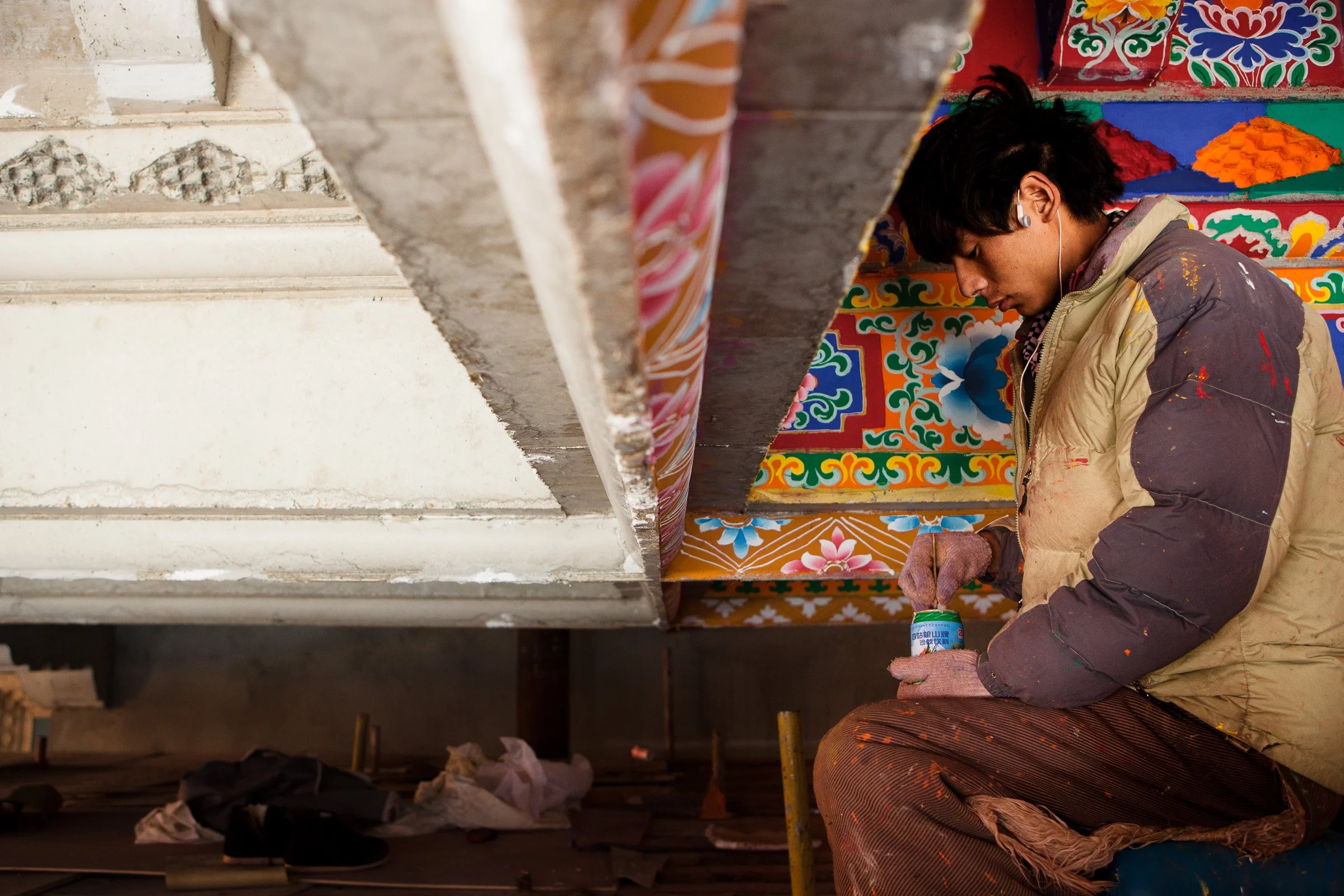
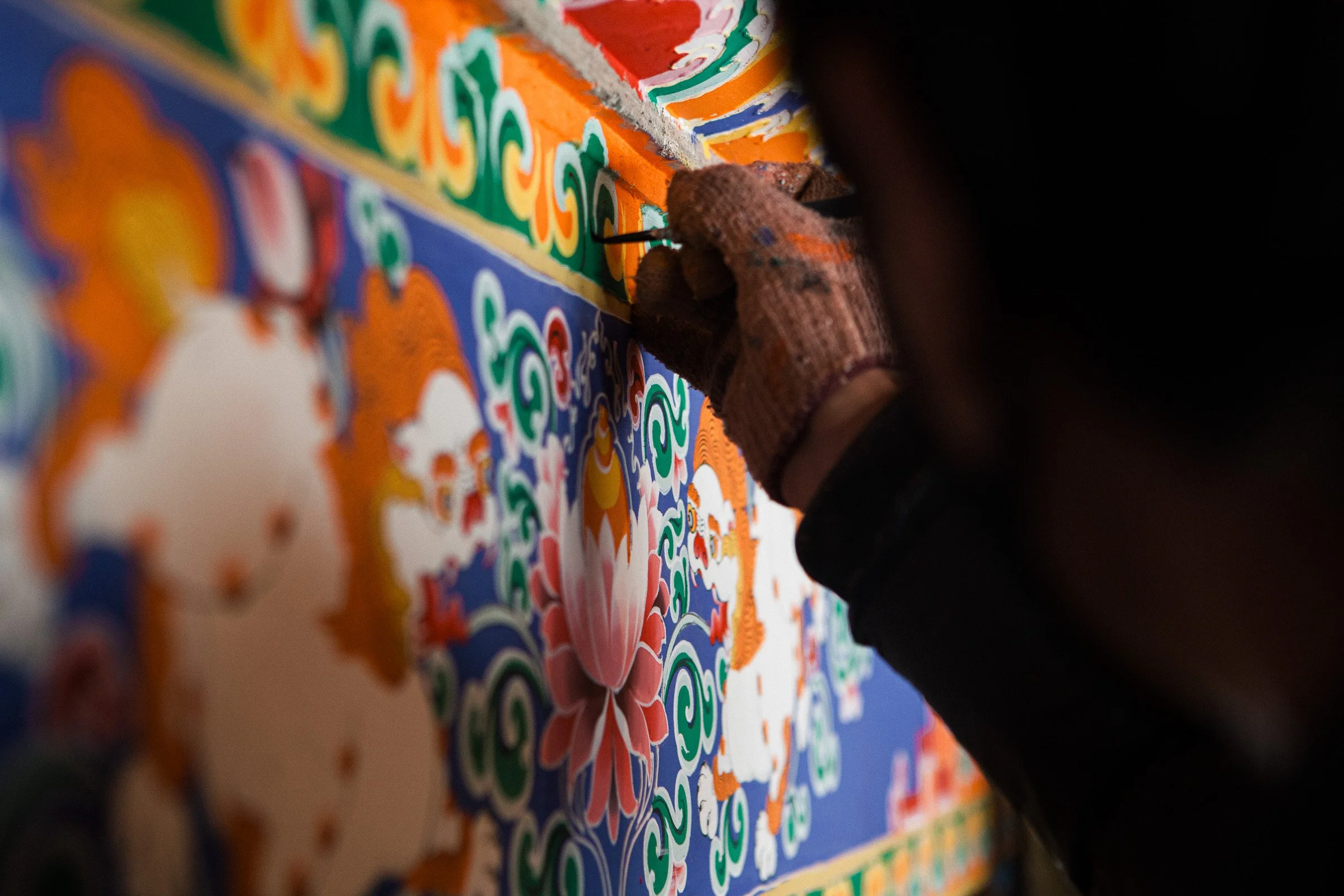
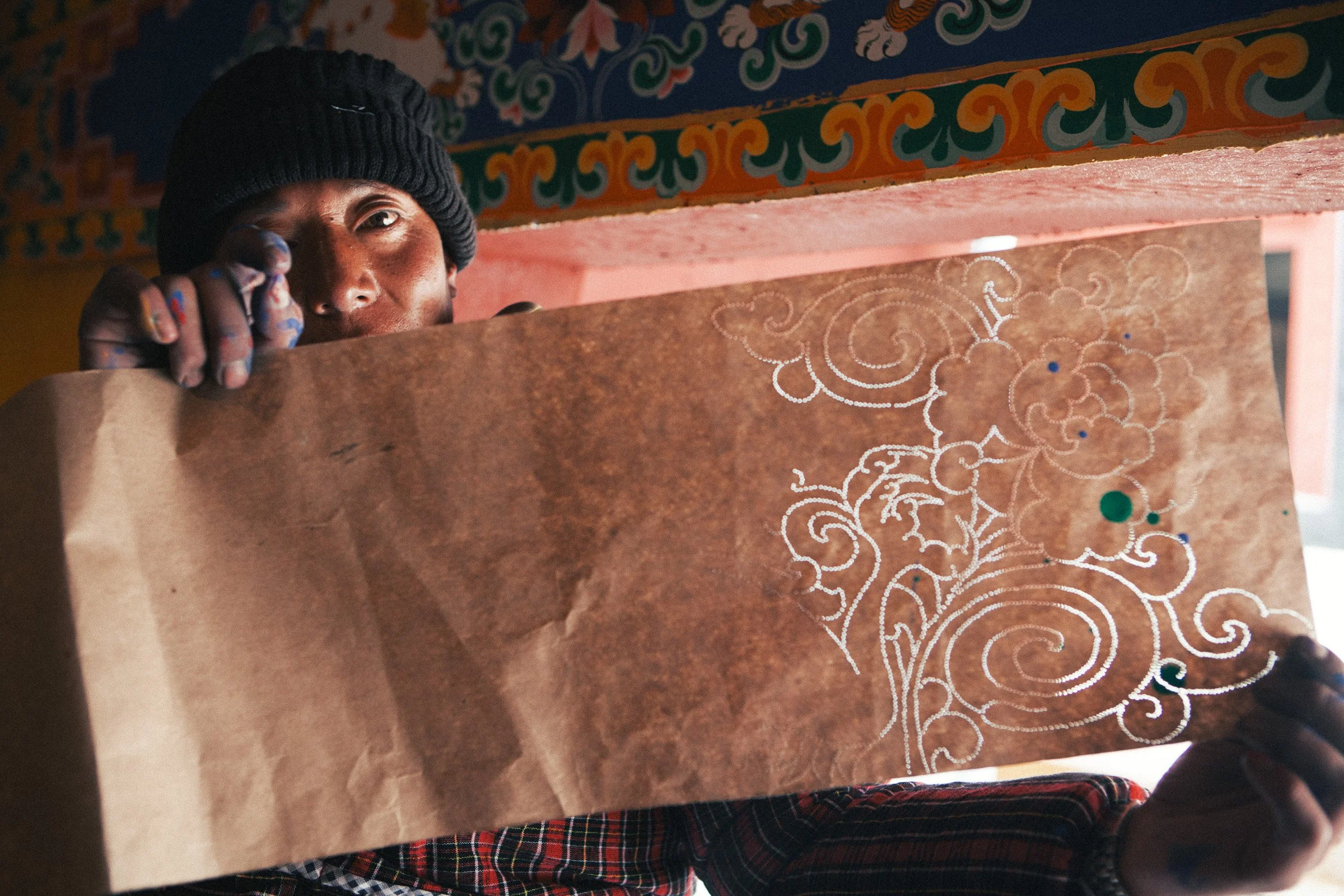
I decide to let the painters continue undisturbed by my presence. Carefully climbing down, I look out the window and see a stair pathway leading further up the mountain. There is something above even this.
Following the path, I walk past prayer wheels and yellow bricked buildings until I reach what must be the heart of the monastery.
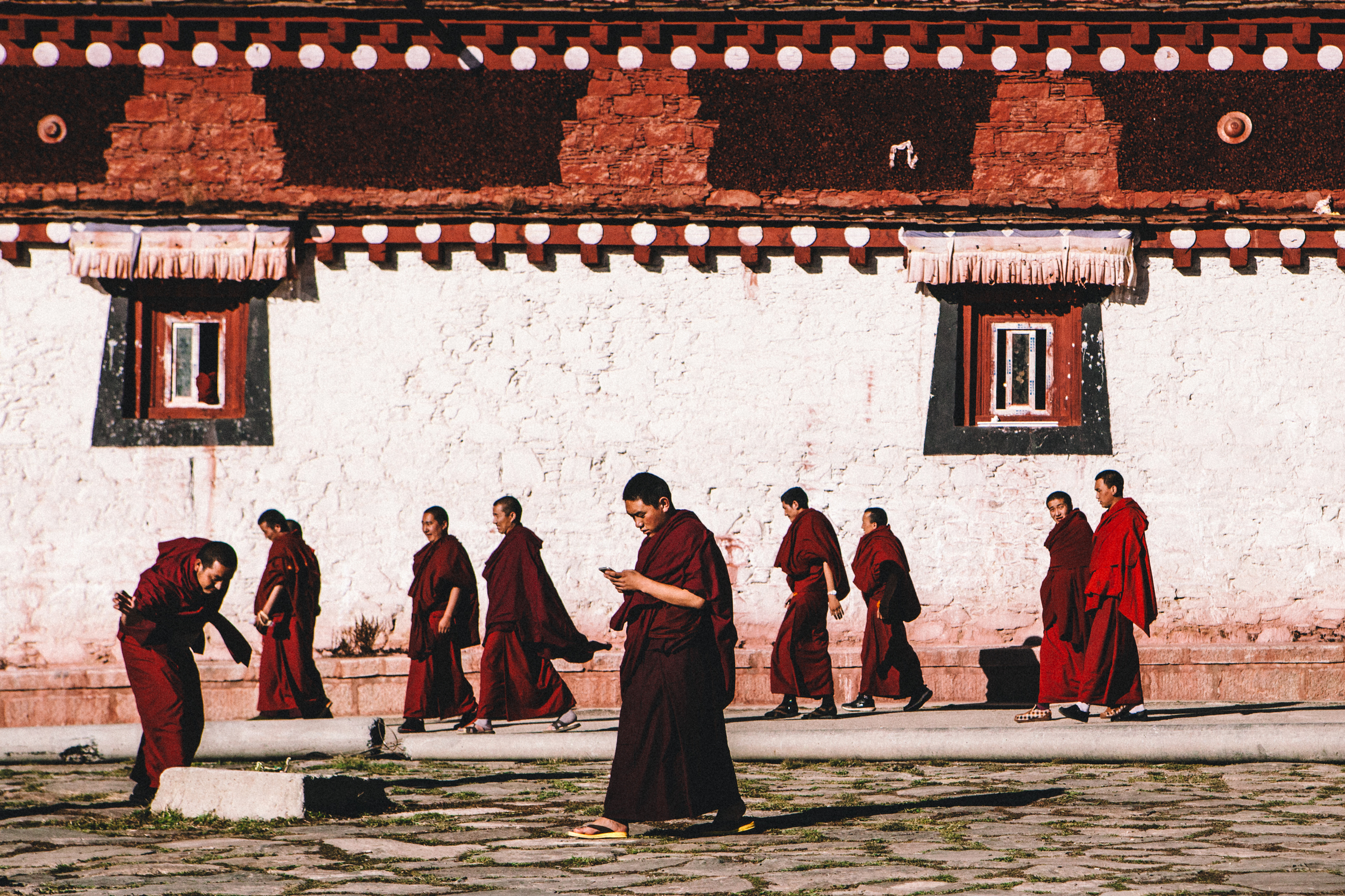
I slip into the main hall of the lamasery, where the corridor opens into a vast room.
Hundreds of young students sitting cross-legged, watching an energetic debate in the middle of the room. It seems like an argument is happening, with loud claps and raised voices. So this is gewa, a Tibetan Buddhist debate to hone logic and analytical skills… I’d heard about it and seen it in videos on the internet, but never in person. As I approach the edge of the room, the students notice me, and suddenly, I’ve become a point of interest.
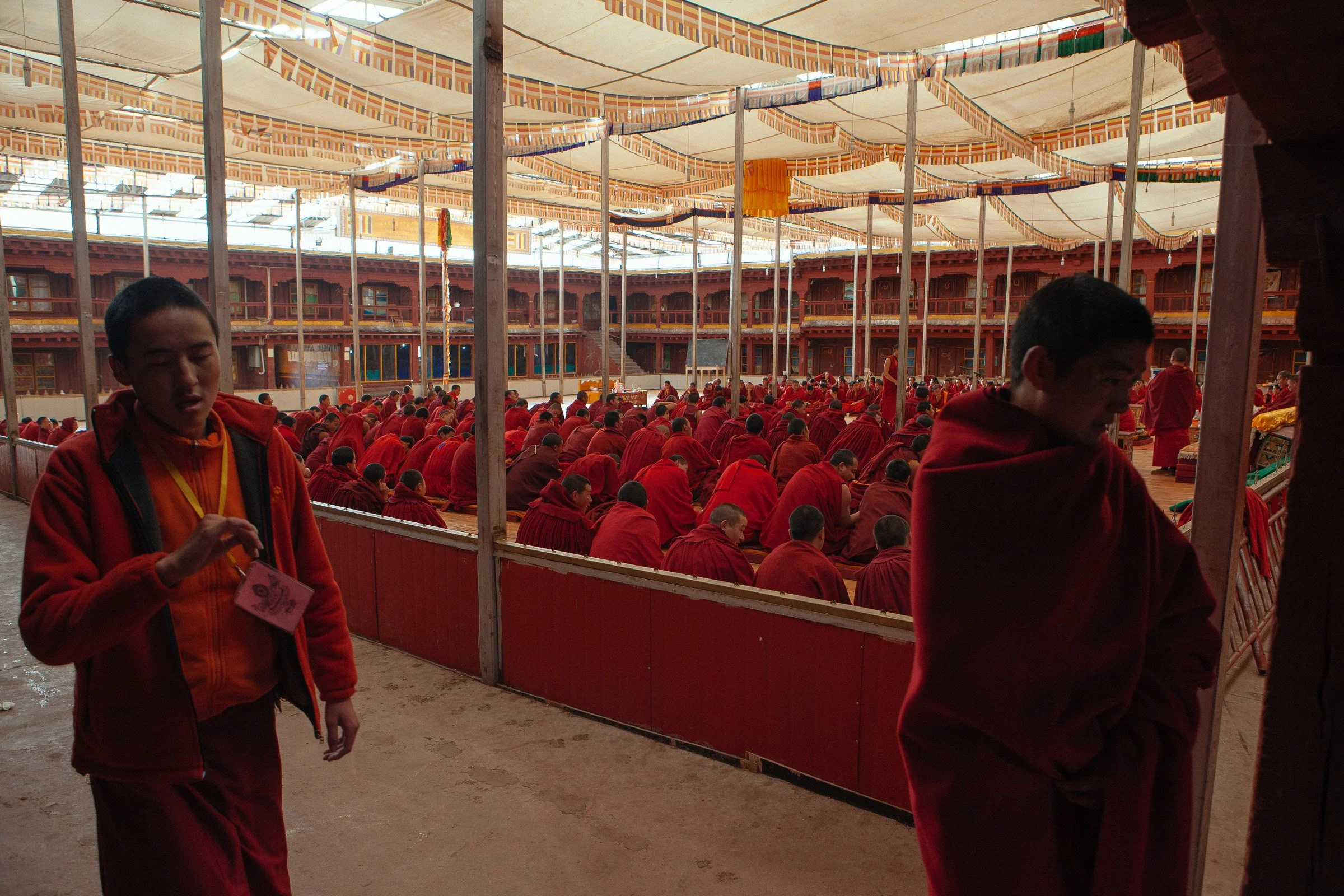
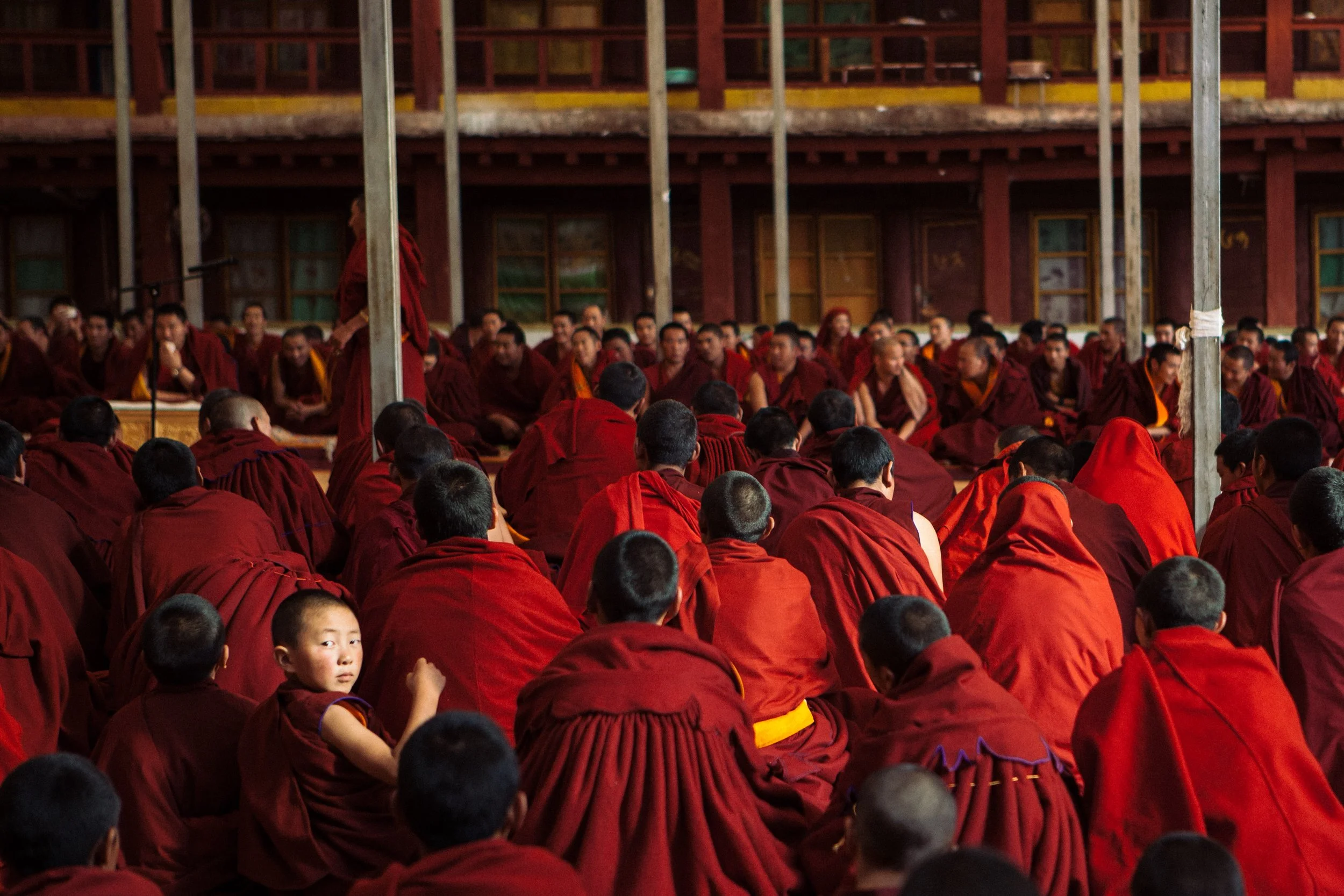
I feel someone gently touch my arm. A friendly looking abbot gestures for me to follow.
We pass through a dim corridor, ducking under low beams. We're in the rafters above another hall, looking down at two massive Buddha statues. This part of the monastery feels forgotten.
We climb a narrow wooden staircase to a simple room. The abbot tells me this was once the room of Sonam Gyatso, the 3rd Dalai Lama. He founded the monastery five centuries ago.
I look around. Afternoon light falls through a dusty window. A kitten appears out of the shadows and sits in the beam of sun… Such simple surroundings. The abbot removes a red string bracelet from his wrist and ties it on mine.
"Whether Tibetan or Han Chinese," he says, "we are one family."
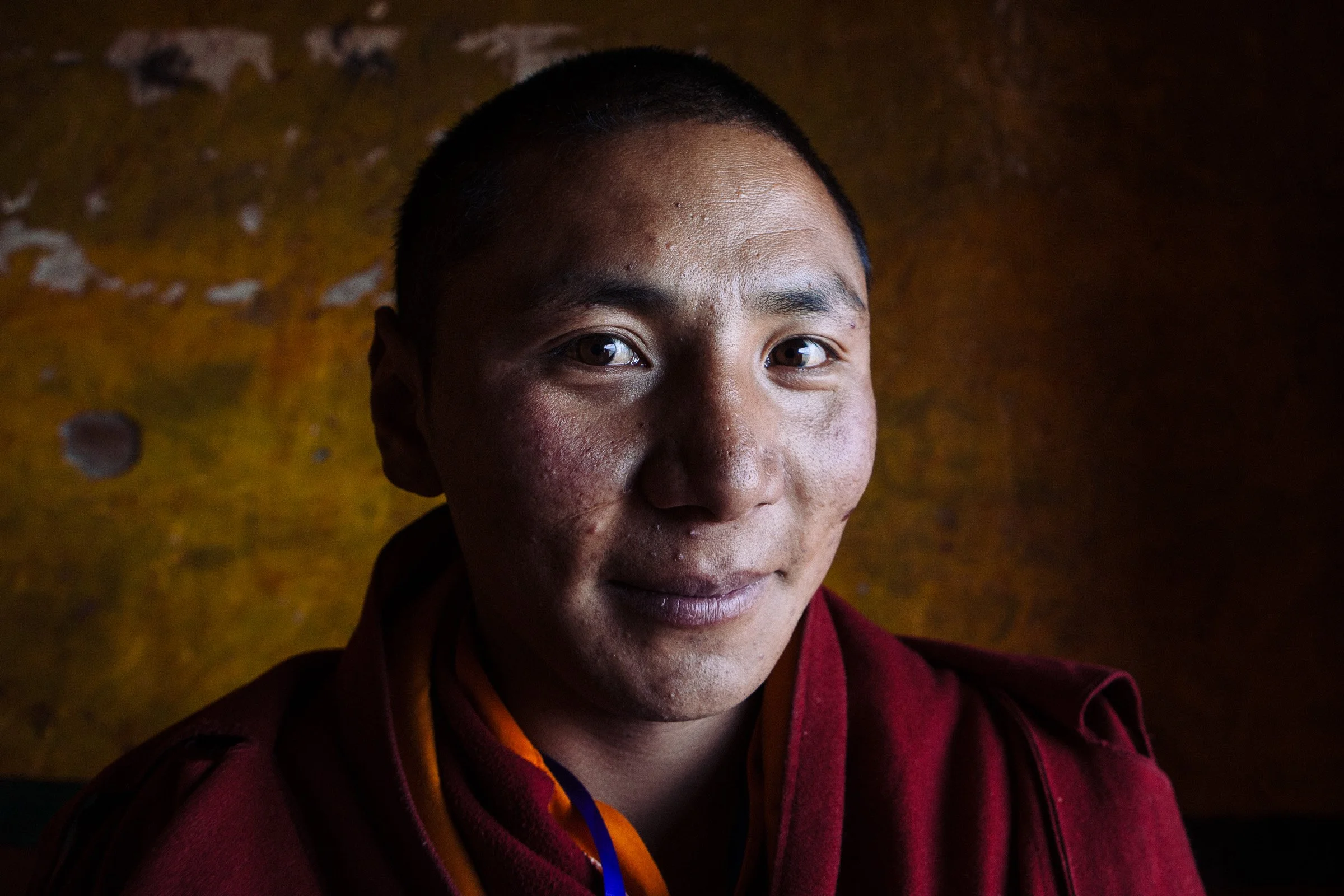
We return to the main hall of the lamasery. The students are taking a break. Like most teenage boys all over the world, they’re on their phones.
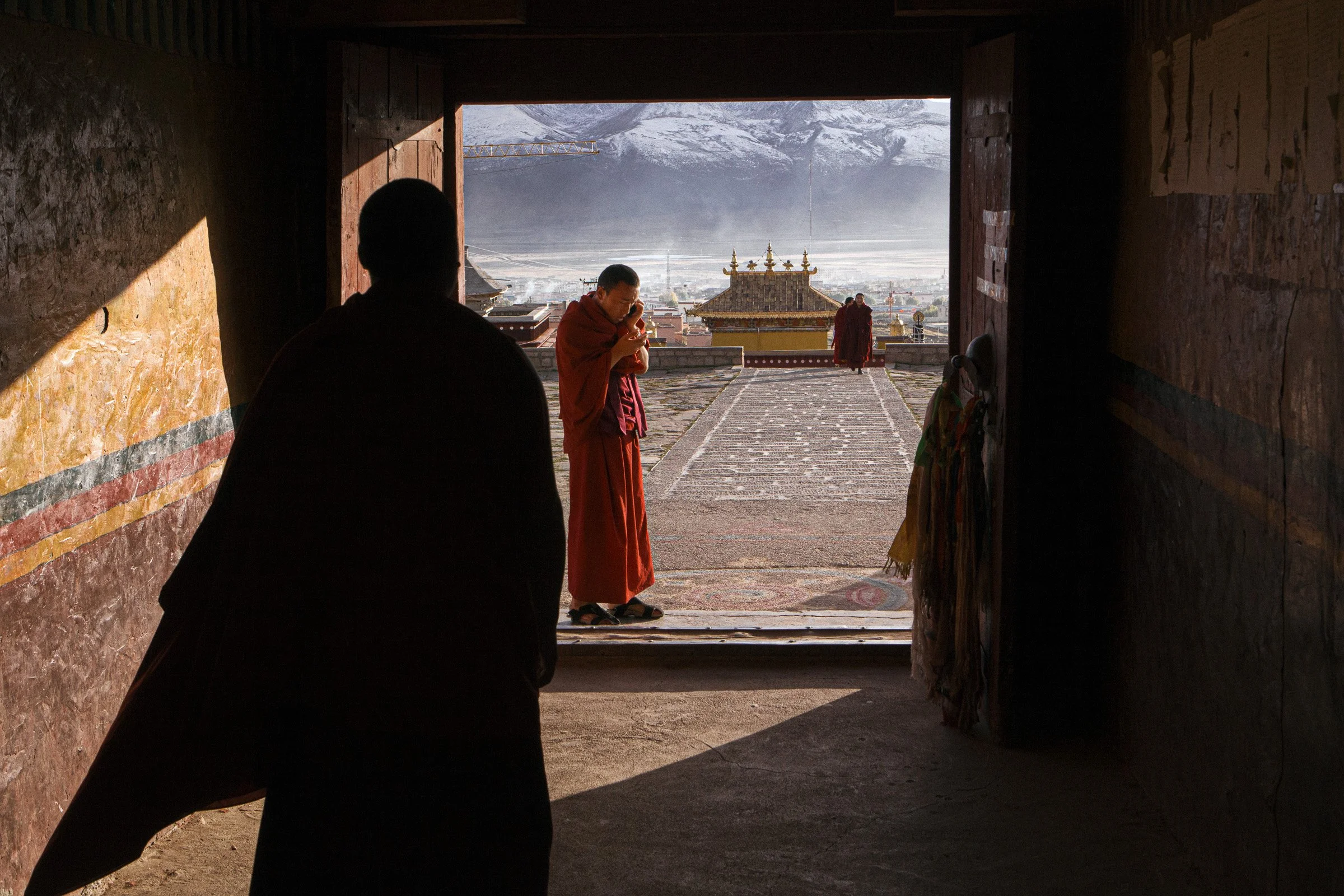
Over the next week, I go back to the monastery many more times, but I can’t seem to find the abbot. I never see him again.
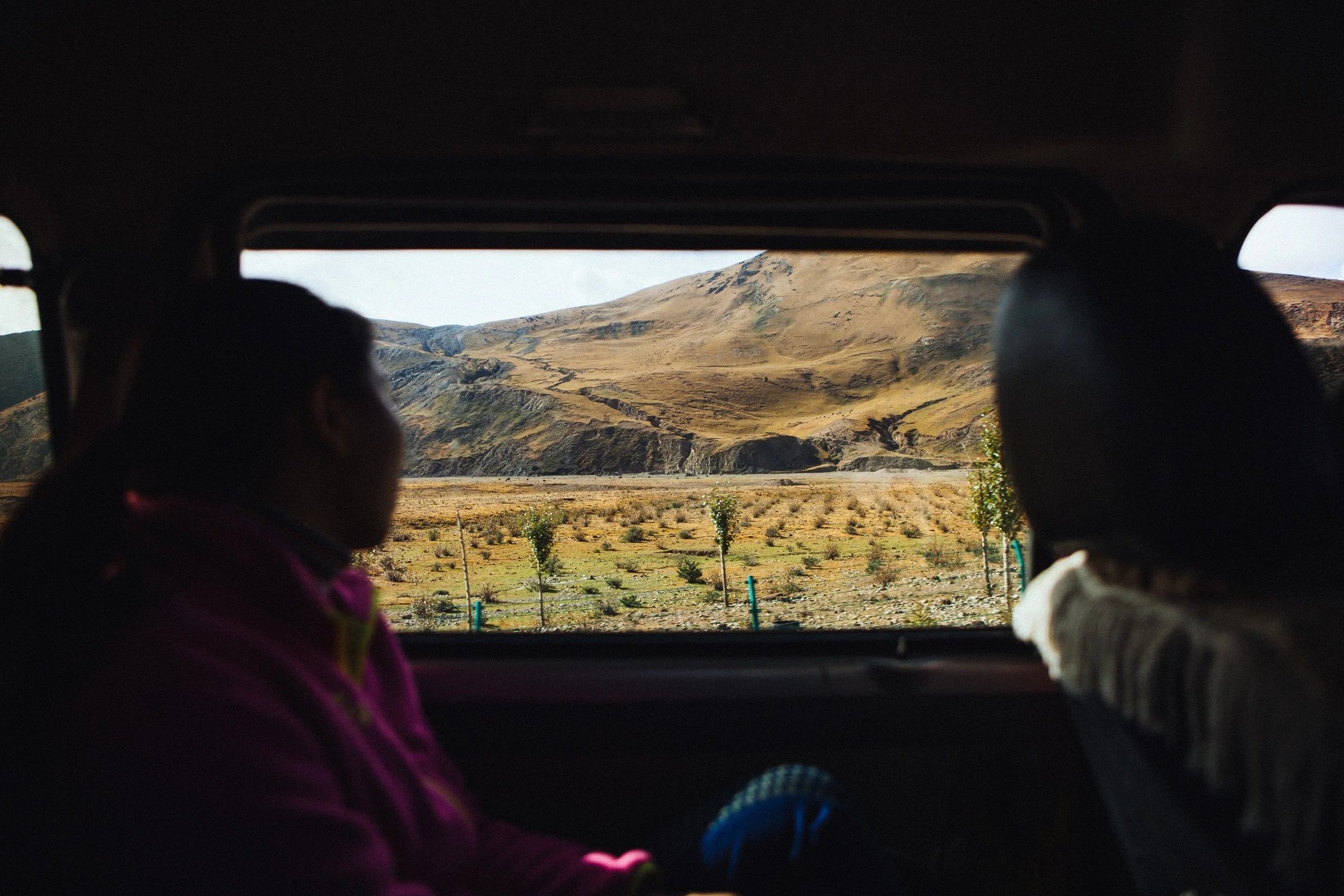
I’m in a shared taxi heading to the airport, back to the life awaiting me in Beijing.
As Litang fades into rolling hills in the rearview mirror, I touch the red string on my wrist… Could it really be that simple?
Maybe not. But perhaps it's a place to start.