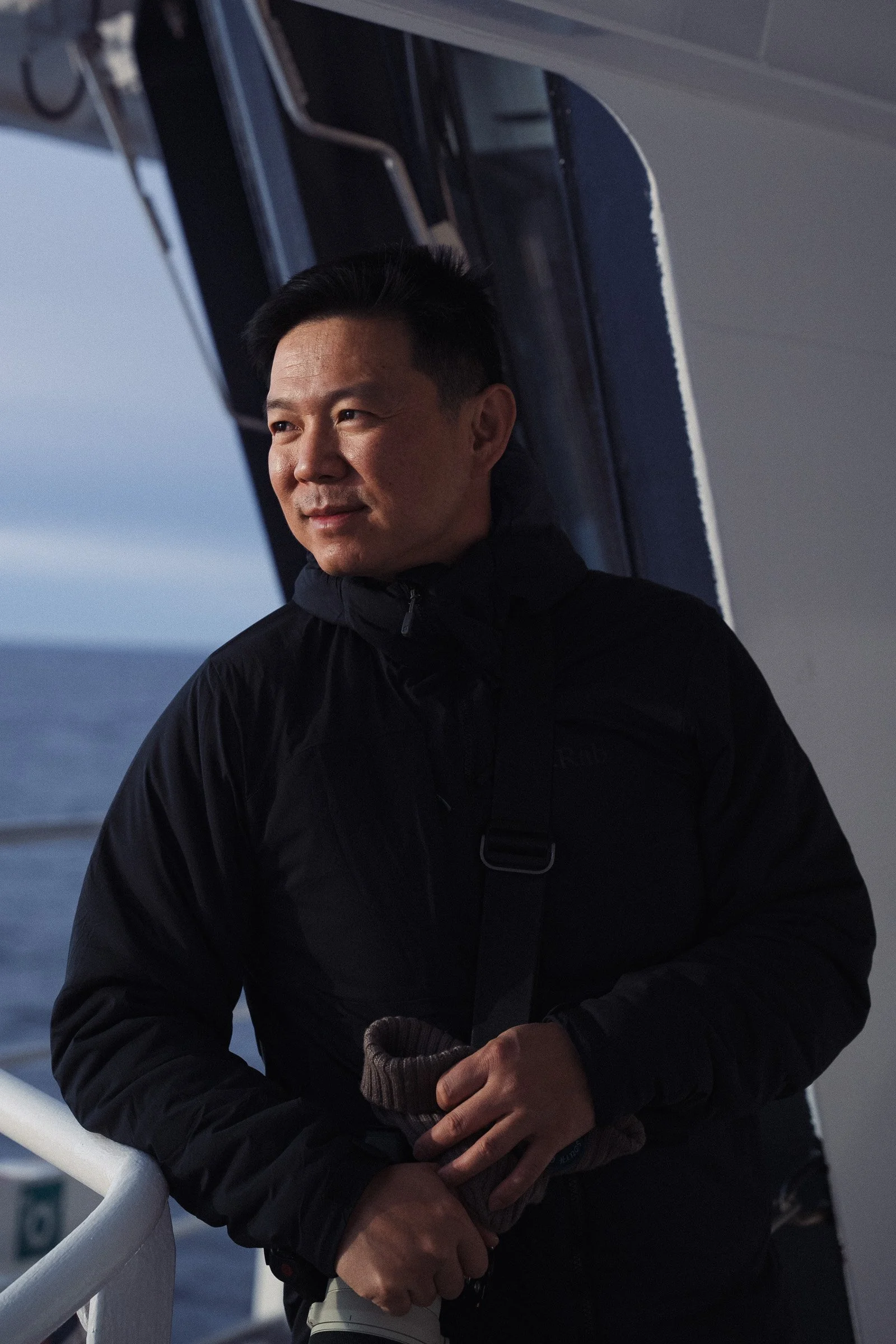
I’m Ricky Qi 祁奇, a filmmaker, photographer and National Geographic Explorer.
Born in Yunnan, China and raised in America, I grew up with two sets of stories: one Chinese and one American. They saw the world differently and didn’t always agree. Being a child of both cultures taught me how much our stories shape the meaning we find in our lives.
Right now, a lot of us are searching for new meaning. The grand narratives we grew up with no longer fit the world we’ve inherited, yet nothing of substance has quite taken their place…
In my own search, I’ve looked to people who still have older stories to lean on. My documentary series Between Heaven and Earth follows living cultures along the old Silk Roads. The first episode, filmed in Kyrgyzstan around the World Nomad Games, asks what nomadic tradition means in a country racing toward modern life. My earlier film Under One Roof, made with a National Geographic Explorer’s grant, follows the Mosuo of southwest China, one of the world’s last matrilineal societies, as they keep their rituals going while adapting to tourism. My photo project Litang: Grass on the Mountain took me to the Tibetan highlands, where young lamas debate the nature of reality, then break to scroll their smartphones.
The same search runs through my narrative films. In Year of the Rat, an immigrant mother tries to reach her American daughter across a growing gap of language and culture. In Three Bows, a young man tries to honor his late grandfather through a ritual he doesn’t quite understand. Year of the Rat premiered at the Hawaii International Film Festival, won a Golden Angel Award at the Chinese American Film Festival, and has been viewed more than 750,000 times.
In the West we tend to think of cultures like the ones I film as vanishing. But I see them as living. Much of the change they face isn’t chosen. It’s pressed on them by markets and governments— forces far bigger than any one village or family. And still, people carry forward what they can. In how they adapt, I think there are lessons for the rest of us, as we look for new stories to replace the ones we’ve lost.
Let’s have a conversation.
Keep up with my latest projects and updates here.